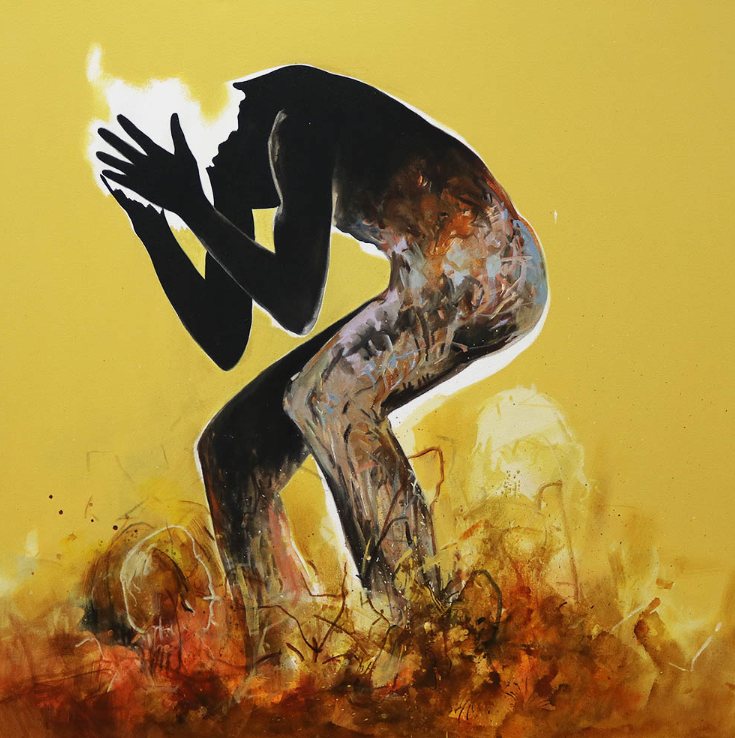
The Body Remembers: How the Mind and Body Speak the Same Language


Body, Soul and Spirit: Ley Mboramwe

“The body is the unconscious mind.” — Joe Dispenza, You Are the Placebo

Have you ever noticed how the body speaks when the mind has been silent too long?

  • The tightness in your chest after an argument.
  • The knot in your stomach when you dread a hard decision.
  • The headache that appears after a day of endless scrolling.

These aren’t random symptoms—they are messages.

For centuries, wisdom traditions have told us the body and mind are one. Today, modern science is catching up. Neuroscience, psychoneuroimmunology, and addiction research show us that our thoughts and feelings don’t just stay in the mind. They become chemistry. They become biology. They shape immunity, hormones, and even the way our DNA expresses itself.

As Dispenza (2014) reminds us, the body stores thought-feeling cycles so deeply that they become states of being. Entire scientific fields now measure how belief and emotion sculpt the body’s health.


The Science of Mind-Body Communication

Psychoneuroimmunology (PNI) studies how the nervous, endocrine, and immune systems dance together with our psychological states.

It began in the 1970s when Robert Ader discovered that immune responses could be conditioned just like Pavlov’s dogs (Ader, 2007). That single discovery shifted medicine: the immune system is not just biochemical—it listens to the brain and emotions.

Since then, research has confirmed what many already intuited:

  • Stress makes us sick. In a classic study, Cohen, Tyrrell, and Smith (1991) exposed healthy volunteers to the common cold virus. Those under high stress were far more likely to develop symptoms.
  • Depression fuels inflammation. Raison and Miller (2013) showed that depression correlates with higher levels of inflammatory markers like interleukin-6. Despair literally burns through the body.
  • Mindfulness heals. Black and Slavich (2016) found that meditation practices reduce inflammatory biomarkers and boost immune resilience. Simply changing thought patterns changes the body’s defenses.

Your immune system isn’t just protecting you from germs—it’s reflecting your inner world.

Fear, anger, and grief weaken it. Calm, hope, and love strengthen it.


Addictions: When Loops Take Over

What happens when emotions and behaviors become chronic cycles?

This is the story of addiction, and here the body’s voice becomes even clearer. Dispenza (2014) describes addictions as “neurochemical feedback loops.” Each time we repeat a thought or behavior, the body becomes more familiar with the feeling it produces. Over time, the body begins to crave that chemical state, even if it’s destructive. The addiction becomes a state of being.

Science confirms this:

  • Alcohol suppresses immunity and increases inflammation, leaving the body more vulnerable (Cook, 1998).
  • Pornography and social media flood the brain with dopamine, rewiring reward pathways (Kuhn & Gallinat, 2014). No wonder eye strain, headaches, and emotional numbness often accompany compulsive screen use.
  • Workaholism and over-responsibility elevate cortisol, creating chronic back pain, tight shoulders, and fatigue—the body literally “carrying the weight” of emotional burdens (Bair et al., 2003).
  • Comfort eating under stress creates abdominal fat and insulin resistance—the body “swallowing” emotions the mind refuses to face (Dallman, Pecoraro, & la Fleur, 2003).

Addictions aren’t failures of willpower. They are the body crying out in its own language: “Something in your inner world needs attention.”


The Body’s Metaphors: When Symptoms Speak

The body is a storyteller. When emotions go unacknowledged, the body often steps in to carry the message. Symptoms are not random misfires of biology; they are metaphors that reveal what the psyche is holding.

Eyes – Seeing Too Much or Refusing to See

Excessive screen use, pornography, or overstimulation often coincides with eye strain, headaches, and even deteriorating vision. Research links compulsive visual behaviors to altered brain structure in regions tied to visual processing and reward circuitry (Kuhn & Gallinat, 2014).
Metaphor: “What am I consuming that I cannot truly look at?”

Throat – Swallowing Words

Persistent throat issues often reveal unspoken truths. Stress weakens mucosal immunity, leaving the throat vulnerable (Cohen et al., 1991).
Metaphor: “What words am I holding back?”

Back and Shoulders – Carrying the Weight

Chronic stress tightens muscles, especially in the shoulders and lower back (Bair et al., 2003).
Metaphor: “What burdens am I carrying that are not mine to hold?”

Hands – Doing Too Much or Refusing to Receive

  • The dominant hand, our hand of action, may ache when we are overburdened or over-controlling (Atroshi et al., 1999).
  • The non-dominant hand, symbolic of receptivity, may hurt when we resist help (Newport & Tanner, 1999).
    Metaphor: “Where am I struggling with giving and receiving?”

Stomach and Digestion – Difficulty Digesting Life

Stress disrupts the gut-brain axis, leading to IBS and other disorders (Mayer, 2011).
Metaphor: “What situation can I not stomach?”

Skin – Boundaries and Exposure

Skin conditions worsen under stress (Arck, Slominski, Theoharides, Peters, & Paus, 2006).
Metaphor: “Where do I feel exposed or unprotected?”

Chest and Heart – Grief and Closing Off

Loneliness and grief are as dangerous to health as smoking (Holt-Lunstad, Smith, & Layton, 2010).
Metaphor: “What grief have I not allowed myself to feel?”

Immune System – Defenses Worn Thin

Chronic stress lowers immunity (Irwin & Cole, 2011).
Metaphor: “Where in life am I overexposed and undefended?”


A Philosopher Who Knew: Spinoza

Centuries before psychoneuroimmunology, Baruch Spinoza (1632–1677) argued that mind and body were not separate things. In Ethics (1677/1994), he rejected Descartes’ dualism. Instead, he claimed there is only one substance—God or Nature—and mind and body are just two ways of experiencing it.

Spinoza’s words remain startlingly modern: “The order and connection of ideas is the same as the order and connection of things” (Ethics, II, Prop. 7).

He defined emotions as bodily changes that either enhance or diminish our power to act (Ethics, III). For him, understanding our emotions was not about guilt or judgment, but about freedom. When we understand what drives us, we stop being passive victims of emotions and start becoming active creators of our health and destiny.

Spinoza saw clearly what modern neuroscience affirms: emotional clarity increases vitality. Confusion breeds suffering. Healing comes through integration, not separation.


Living the Connection

Understanding the mind-body connection is one thing. Living it is another. Awareness only becomes transformation when we take what the body is saying and respond with intention.

1. Listen to Symptoms as Signals, Not Malfunctions

  • Example: Maria’s migraines arrived every Monday before stressful meetings. Her body was signaling overwhelm.
  • Practice: Ask, “If this symptom could speak, what would it say?” Write the first words that arise.

2. Interrupt Addiction Loops by Changing Inner State

  • Example: James scrolled late at night, seeking numbing. His eyes ached, and his sleep suffered.
  • Practice: Pause before the addictive behavior. Take three breaths, imagine the feeling you seek (calm, excitement, connection), and ask, “What healthier action could give me this now?”

3. Practice Mind-Body Interventions to Reset Your Systems

  • Example: Aisha, a caregiver, kept getting sick. A daily 10-minute meditation restored her resilience (Black & Slavich, 2016).
  • Practice: Sit quietly, hand on chest and stomach. Inhale 4 counts, exhale 6. Imagine your breath sweeping tension away.

4. Honor the Body’s Metaphors with Gentle Action

  • Example: Lena’s back pain reflected financial burdens she was carrying alone. Sharing responsibility eased her pain.
  • Practice: Choose one symptom and ask: “What is this telling me?” Then take one gentle step to honor it—like saying “no,” journaling, or asking for help.

5. Follow Spinoza’s Invitation: From Passive to Active

  • Example: Daniel’s anxiety eased when he named its source—financial insecurity—and took steps toward clarity.
  • Practice: Ask, “Where is this emotion coming from, and what does it want me to understand?” Then choose one action that expands your freedom to act.

Integration

Living the connection is about shifting from ignoring the body to partnering with it. Each ache, craving, or illness is not just a malfunction but a messenger. When we pause, listen, and respond with awareness, the body and mind begin to align.

As Dispenza (2014) reminds us, “You are the placebo.” And as Spinoza (1677/1994) insisted, mind and body are one expression of the same truth. Healing begins when we learn to translate the language of the body into meaningful action.


References

Ader, R. (2007). Psychoneuroimmunology (4th ed.). Academic Press.
Arck, P., Slominski, A., Theoharides, T. C., Peters, E. M., & Paus, R. (2006). Neuroimmunology of stress: Skin takes center stage. Journal of Investigative Dermatology, 126(8), 1697–1704. https://doi.org/10.1038/sj.jid.5700104
Atroshi, I., Gummesson, C., Johnsson, R., Ornstein, E., Ranstam, J., & Rosén, I. (1999). Prevalence of carpal tunnel syndrome in a general population. JAMA, 282(2), 153–158. https://doi.org/10.1001/jama.282.2.153
Bair, M. J., Wu, J., Damush, T. M., Sutherland, J. M., & Kroenke, K. (2003). Association of depression and anxiety alone and in combination with chronic musculoskeletal pain in primary care patients. Psychosomatic Medicine, 65(5), 772–781. https://doi.org/10.1097/01.PSY.0000088596.92653.49
Black, D. S., & Slavich, G. M. (2016). Mindfulness meditation and the immune system: A systematic review of randomized controlled trials. Annals of the New York Academy of Sciences, 1373(1), 13–24. https://doi.org/10.1111/nyas.12998
Cohen, S., Tyrrell, D. A., & Smith, A. P. (1991). Psychological stress and susceptibility to the common cold. The New England Journal of Medicine, 325(9), 606–612. https://doi.org/10.1056/NEJM199108293250903
Cook, R. T. (1998). Alcohol abuse, alcoholism, and damage to the immune system—A review. Alcohol Health & Research World, 22(1), 47–52.
Dallman, M. F., Pecoraro, N. C., & la Fleur, S. E. (2003). Chronic stress and comfort foods: Self-medication and abdominal obesity. Brain, Behavior, and Immunity, 17(4), 223–233. https://doi.org/10.1016/S0889-1591(03)00032-9
Dispenza, J. (2014). You are the placebo: Making your mind matter. Hay House, Inc.
Holt-Lunstad, J., Smith, T. B., & Layton, J. B. (2010). Social relationships and mortality risk: A meta-analytic review. PLoS Medicine, 7(7), e1000316. https://doi.org/10.1371/journal.pmed.1000316
Irwin, M. R., & Cole, S. W. (2011). Reciprocal regulation of the neural and innate immune systems. Nature Reviews Immunology, 11(9), 625–632. https://doi.org/10.1038/nri3042
Kuhn, S., & Gallinat, J. (2014). Brain structure and functional connectivity associated with pornography consumption: The brain on porn. JAMA Psychiatry, 71(7), 827–834. https://doi.org/10.1001/jamapsychiatry.2014.93
Mayer, E. A. (2011). Gut feelings: The emerging biology of gut–brain communication. Nature Reviews Neuroscience, 12(8), 453–466. https://doi.org/10.1038/nrn3071
Newport, M. L., & Tanner, S. M. (1999). Functional impact of hand injuries: A review. Journal of Hand Therapy, 12(2), 99–107. https://doi.org/10.1016/S0894-1130(99)80045-7
Raison, C. L., & Miller, A. H. (2013). The evolutionary significance of depression in pathogen host defense (the pathogen host defense hypothesis). Molecular Psychiatry, 18(1), 15–37. https://doi.org/10.1038/mp.2012.2
Spinoza, B. (1994). Ethics (E. Curley, Trans.). Princeton University Press. (Original work published 1677)


Understanding Irritable Male Syndrome (IMS) and Premenstrual Syndrome (PMS): A Path to Self-Awareness Inspired by Eckhart Tolle

In a world where emotions often feel like turbulent waves crashing against the shores of our daily lives, understanding the intricate nuances of our feelings can be both enlightening and transformative. Enter Irritable Male Syndrome (IMS) and Premenstrual Syndrome (PMS)—two conditions that, while seemingly polarized by gender, share a profound connection rooted in emotional awareness. Just as Eckhart Tolle invites us to transcend the chaos of the mind through mindfulness and presence, we too can uncover deeper insights into these syndromes by exploring their impact on self-perception and interpersonal relationships.Join us on this journey as we delve into IMS and PMS—unpacking their symptoms, challenges, and pathways to self-awareness inspired by Tolle’s teachings. Whether you’re seeking clarity for yourself or looking to better understand someone close to you, this exploration seeks not only to inform but also to inspire growth beyond limitations. Embrace the possibility of emotional freedom as we navigate these complex experiences together!

Introduction to Irritable Male Syndrome and PMS

In the grand tapestry of existence, where emotions weave in and out like the undulating peaks of a rollercoaster, both men and women find themselves navigating the tumultuous waters of Irritable Male Syndrome (IMS) and Premenstrual Syndrome (PMS). These phenomena may appear to be disparate experiences, yet they are threads that intertwine within our shared human condition. Imagine approaching these emotional upheavals not merely as burdens but as gateways to profound self-awareness—much like Eckhart Tolle invites us to embrace the present moment fully. In surrendering to the raw intensity of our feelings during bouts of IMS or PMS, we can unearth valuable insights about ourselves; each wave of irritability or sorrow becomes an invitation to pause and reflect on our inner landscape.

This rollercoaster doesn’t have to be merely chaotic—it can serve as a transformative ride through which we learn vulnerability’s lessons: acceptance, compassion for ourselves and others, and ultimately a deeper connection with our authentic selves beyond societal constructs. Herein lies a paradox: it is through acknowledging these storms that we begin to cultivate inner peace—a fleeting yet invaluable gift amid life’s unpredictabilities. The crux lies not in overcoming emotional turbulence but in recognizing it as part of the essence that makes us beautifully human.

Differences between the two syndromes

When it comes to the emotional and physical upheavals that can accompany hormonal changes, understanding the differences between Irritable Male Syndrome (IMS) and PMS is crucial. While PMS typically affects women in their menstrual cycle with symptoms like mood swings, bloating, and irritability due to fluctuating estrogen and progesterone levels, IMS is a lesser-known phenomenon experienced by men as testosterone levels dip—often during midlife. Imagine a man feeling unusually anxious or irritable without any clear reason; that’s often what IMS looks like.

Unlike PMS, which follows a predictable monthly pattern tied directly to menstruation, IMS can be more erratic and may not follow any specific timeline at all. Both syndromes share common ground in how they disrupt emotional well-being but diverge sharply in their triggers—while one revolves around cyclical hormonal shifts in females, the other emerges from declining male hormones brought on by factors such as stress and age-related physiological changes. So next time someone mentions “mood swings,” it’s essential to consider whether they’re referring to their female or male counterpart!

Symptoms and causes of Irritable Male Syndrome (IMS)

Irritable Male Syndrome (IMS) is a condition that can catch many off guard, as it often manifests in perplexing ways. Symptoms of IMS may include sudden mood swings, irritability, and heightened sensitivity to stressors that might not have previously provoked such reactions. Men experiencing IMS might find themselves feeling anxious or overwhelmed by tasks they once tackled with ease; their patience appears thin and emotions run high.

The causes of this intriguing syndrome stem from a complex interplay of biological and psychological factors—ranging from hormonal fluctuations like decreasing testosterone levels to external pressures such as work stress or family responsibilities. Additionally, lifestyle choices including poor diet and lack of exercise can exacerbate existing frustrations, creating a cycle where emotional turbulence brews amidst daily challenges. All these elements together make for an intricate dance between biology and behavior in the manifestation of Irritable Male Syndrome.

Symptoms and causes of Premenstrual Syndrome (PMS)

Premenstrual Syndrome (PMS) can often feel like an unwelcome guest that shows up uninvited each month, bringing with it a cacophony of symptoms. Individuals experiencing PMS may find themselves battling mood swings, irritability, and anxiety as hormonal fluctuations begin to take their toll. Physical manifestations are no less disruptive; bloating, breast tenderness, headaches, and fatigue frequently join the emotional rollercoaster. But what causes this monthly disruption?

The culprits typically lie within the intricate dance of hormones—particularly estrogen and progesterone—that fluctuate dramatically during the menstrual cycle. Stress levels can exacerbate these symptoms while lifestyle factors such as diet, exercise habits, and even genetics play pivotal roles in how severe one’s PMS might be. Some may also notice that certain triggers like caffeine or alcohol heighten their discomfort, making awareness a crucial aspect of managing this complex syndrome. Understanding your body’s signals is key in navigating through these challenging premenstrual days effectively!

The Role of Self-Awareness: Eckhart Tolle’s Perspective

In Eckhart Tolle’s exploration of consciousness, he profoundly emphasizes the pivotal role of self-awareness as a transformative gateway to understanding one’s true essence. Tolle asserts that self-awareness serves not merely as an intellectual exercise but as a vital process through which individuals can transcend their egoic identities and reconnect with the present moment. By cultivating this heightened awareness of thoughts, emotions, and sensations without attachment or judgment, one embarks on a journey toward inner peace and clarity.

When individuals engage in genuine self-reflection backed by mindfulness practices—such as observing the incessant chatter of the mind—they begin to recognize the ephemeral nature of their mental constructs. This recognition facilitates liberation from habitual patterns and societal conditioning, allowing for greater presence in everyday life. In this light, self-awareness becomes more than a psychological tool; it evolves into an essential practice that fosters authentic existence beyond superficial identification with roles or material possessions. Through Tolle’s lens, we come to appreciate that embracing our present moment is synonymous with accessing deeper layers of consciousness where stillness resides amidst life’s chaos.

How IMS and PMS can be viewed as opportunities for self-awareness

In the ever-unfolding tapestry of human experience, both Irritable Male Syndrome and PMS serve not merely as challenges, but as profound gateways to self-awareness. When one encounters the heightened irritability associated with these states—the tension that grips the body and mind—it is an invitation to descend beneath the surface of emotional turbulence and confront what lies hidden within. Herein lies the opporutnity; it beckons individuals towards a deeper understanding of themselves, prompting an exploration into how external stimuli trigger internal reactions. In pondering this interplay between emotions and physical sensations, there emerges a potent opportunity for stillness—a moment to observe thoughts without judgment or identification.

As awareness expands like sunlight filtering through dense foliage, so too can clarity blossom in recognizing patterns rooted in historical narratives or societal expectations. Each surge of annoyance or discomfort becomes a signal; each pang reminiscent of a cosmic nudge gently guiding us toward liberation from unconscious behaviors. Embracing these moments with presence transforms them into invitations for mindful introspection—an essential practice wherein we can transcend reactive tendencies and align ourselves more closely with our true nature, freeing us from the cycle of suffering often perpetuated by misunderstanding oneself amidst life’s inevitable fluctuations.

Coping mechanisms for managing IMS and PMS

Coping with Irritable Male Syndrome and Premenstrual Syndrome involves practical strategies that gently guide you back to a state of presence, as Eckhart Tolle might suggest.

The practice of mindfulness becomes an anchor in the swirling seas of emotional upheaval; simply pausing for a few moments to breathe deeply allows the chaos within to dissolve allowng you to trace the emotion to its root. When irritation arises—a reminder that your consciousness is caught in the past or future and returning to this breath can illuminate the moment at hand and reveal it as rich with possibility.

Physical activity serves not just as exercise but also as a dance between body and spirit; each endorphin released acts like sunshine breaking through clouds, illuminating your inner landscape and affirming life’s vibrancy. Embrace whatever movement resonates with you—be it the gentle rhythm of walking or the liberating intensity of a workout, for each step taken brings mindful awareness closer.

Nutrition, too, plays its part in sculpting our emotional states; consider how whole foods nourish both body and mind while steering clear of excess caffeine or sugar that may ignite stormy feelings. Communication transforms relationships into havens where understanding flourishes; expressing emotions openly creates spaces where vulnerability thrives rather than fragments under unspoken assumptions.

Finally, journaling emerges as a sacred ritual—a pen gliding across paper reveals truth hidden beneath layers of thought and feeling, offering insights into personal triggers while nurturing self-reflection on what lies beneath these tensions known collectively as IMS or PMS behaviors.

Conclusion: Finding peace and balance through self-awareness

In the stillness of your being, amidst the incessant chatter of thoughts and emotions, lies an opportunity to cultivate harmony within. Finding peace and balance through self-awareness invites you to step into the sanctuary of the present moment, where the relentless grip of past regrets and future anxieties gently dissipates like morning mist under a rising sun. As you observe your internal landscape with compassion and curiosity, you begin to unravel the layers that obscure your essence—the frantic need for approval, the burdensome weight of expectation—and in this unveiling comes clarity. Each breath becomes a reminder that awareness is not just a tool but a way of being; it allows you to recognize how fleeting moments can spark joy or enkindle sorrow without tying them to who you are at your core. In this sacred space where thought meets presence, love emerges unencumbered by judgment or fear; realigning your energy with life’s natural flow transforms chaos into serene acceptance—a profound dance between acceptance and surrender. The simple act of noticing—your thoughts swirling like leaves caught in autumn’s breeze—invites a gentle return home wherein true balance resides: within yourself.