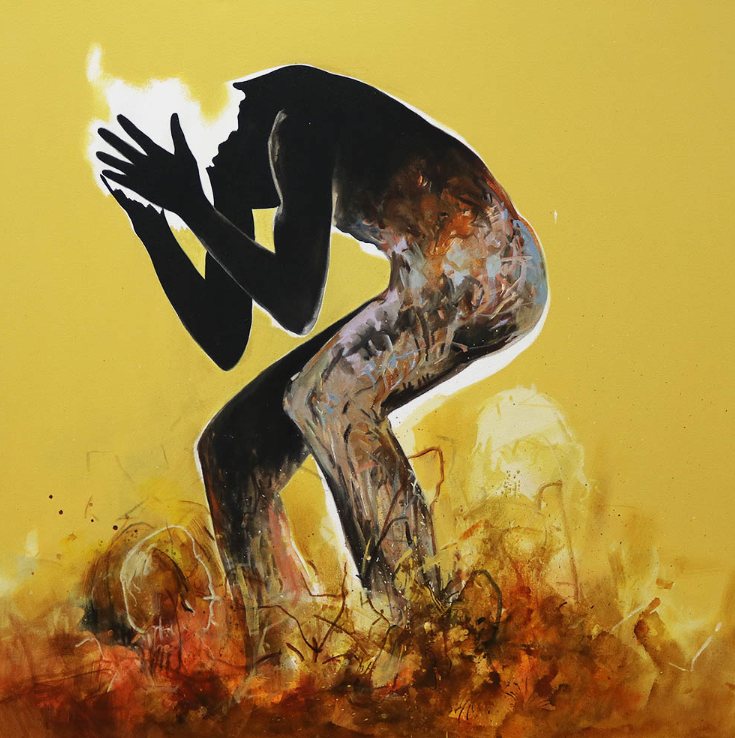
“The body is the unconscious mind.” — Joe Dispenza, You Are the Placebo
Have you ever noticed how the body speaks when the mind has been silent too long?
- The tightness in your chest after an argument.
- The knot in your stomach when you dread a hard decision.
- The headache that appears after a day of endless scrolling.
These aren’t random symptoms—they are messages.
For centuries, wisdom traditions have told us the body and mind are one. Today, modern science is catching up. Neuroscience, psychoneuroimmunology, and addiction research show us that our thoughts and feelings don’t just stay in the mind. They become chemistry. They become biology. They shape immunity, hormones, and even the way our DNA expresses itself.
As Dispenza (2014) reminds us, the body stores thought-feeling cycles so deeply that they become states of being. Entire scientific fields now measure how belief and emotion sculpt the body’s health.
The Science of Mind-Body Communication
Psychoneuroimmunology (PNI) studies how the nervous, endocrine, and immune systems dance together with our psychological states.
It began in the 1970s when Robert Ader discovered that immune responses could be conditioned just like Pavlov’s dogs (Ader, 2007). That single discovery shifted medicine: the immune system is not just biochemical—it listens to the brain and emotions.
Since then, research has confirmed what many already intuited:
- Stress makes us sick. In a classic study, Cohen, Tyrrell, and Smith (1991) exposed healthy volunteers to the common cold virus. Those under high stress were far more likely to develop symptoms.
- Depression fuels inflammation. Raison and Miller (2013) showed that depression correlates with higher levels of inflammatory markers like interleukin-6. Despair literally burns through the body.
- Mindfulness heals. Black and Slavich (2016) found that meditation practices reduce inflammatory biomarkers and boost immune resilience. Simply changing thought patterns changes the body’s defenses.
Your immune system isn’t just protecting you from germs—it’s reflecting your inner world.
Fear, anger, and grief weaken it. Calm, hope, and love strengthen it.
Addictions: When Loops Take Over
What happens when emotions and behaviors become chronic cycles?
This is the story of addiction, and here the body’s voice becomes even clearer. Dispenza (2014) describes addictions as “neurochemical feedback loops.” Each time we repeat a thought or behavior, the body becomes more familiar with the feeling it produces. Over time, the body begins to crave that chemical state, even if it’s destructive. The addiction becomes a state of being.
Science confirms this:
- Alcohol suppresses immunity and increases inflammation, leaving the body more vulnerable (Cook, 1998).
- Pornography and social media flood the brain with dopamine, rewiring reward pathways (Kuhn & Gallinat, 2014). No wonder eye strain, headaches, and emotional numbness often accompany compulsive screen use.
- Workaholism and over-responsibility elevate cortisol, creating chronic back pain, tight shoulders, and fatigue—the body literally “carrying the weight” of emotional burdens (Bair et al., 2003).
- Comfort eating under stress creates abdominal fat and insulin resistance—the body “swallowing” emotions the mind refuses to face (Dallman, Pecoraro, & la Fleur, 2003).
Addictions aren’t failures of willpower. They are the body crying out in its own language: “Something in your inner world needs attention.”
The Body’s Metaphors: When Symptoms Speak
The body is a storyteller. When emotions go unacknowledged, the body often steps in to carry the message. Symptoms are not random misfires of biology; they are metaphors that reveal what the psyche is holding.
Eyes – Seeing Too Much or Refusing to See
Excessive screen use, pornography, or overstimulation often coincides with eye strain, headaches, and even deteriorating vision. Research links compulsive visual behaviors to altered brain structure in regions tied to visual processing and reward circuitry (Kuhn & Gallinat, 2014).
Metaphor: “What am I consuming that I cannot truly look at?”
Throat – Swallowing Words
Persistent throat issues often reveal unspoken truths. Stress weakens mucosal immunity, leaving the throat vulnerable (Cohen et al., 1991).
Metaphor: “What words am I holding back?”
Back and Shoulders – Carrying the Weight
Chronic stress tightens muscles, especially in the shoulders and lower back (Bair et al., 2003).
Metaphor: “What burdens am I carrying that are not mine to hold?”
Hands – Doing Too Much or Refusing to Receive
- The dominant hand, our hand of action, may ache when we are overburdened or over-controlling (Atroshi et al., 1999).
- The non-dominant hand, symbolic of receptivity, may hurt when we resist help (Newport & Tanner, 1999).
Metaphor: “Where am I struggling with giving and receiving?”
Stomach and Digestion – Difficulty Digesting Life
Stress disrupts the gut-brain axis, leading to IBS and other disorders (Mayer, 2011).
Metaphor: “What situation can I not stomach?”
Skin – Boundaries and Exposure
Skin conditions worsen under stress (Arck, Slominski, Theoharides, Peters, & Paus, 2006).
Metaphor: “Where do I feel exposed or unprotected?”
Chest and Heart – Grief and Closing Off
Loneliness and grief are as dangerous to health as smoking (Holt-Lunstad, Smith, & Layton, 2010).
Metaphor: “What grief have I not allowed myself to feel?”
Immune System – Defenses Worn Thin
Chronic stress lowers immunity (Irwin & Cole, 2011).
Metaphor: “Where in life am I overexposed and undefended?”
A Philosopher Who Knew: Spinoza
Centuries before psychoneuroimmunology, Baruch Spinoza (1632–1677) argued that mind and body were not separate things. In Ethics (1677/1994), he rejected Descartes’ dualism. Instead, he claimed there is only one substance—God or Nature—and mind and body are just two ways of experiencing it.
Spinoza’s words remain startlingly modern: “The order and connection of ideas is the same as the order and connection of things” (Ethics, II, Prop. 7).
He defined emotions as bodily changes that either enhance or diminish our power to act (Ethics, III). For him, understanding our emotions was not about guilt or judgment, but about freedom. When we understand what drives us, we stop being passive victims of emotions and start becoming active creators of our health and destiny.
Spinoza saw clearly what modern neuroscience affirms: emotional clarity increases vitality. Confusion breeds suffering. Healing comes through integration, not separation.
Living the Connection
Understanding the mind-body connection is one thing. Living it is another. Awareness only becomes transformation when we take what the body is saying and respond with intention.
1. Listen to Symptoms as Signals, Not Malfunctions
- Example: Maria’s migraines arrived every Monday before stressful meetings. Her body was signaling overwhelm.
- Practice: Ask, “If this symptom could speak, what would it say?” Write the first words that arise.
2. Interrupt Addiction Loops by Changing Inner State
- Example: James scrolled late at night, seeking numbing. His eyes ached, and his sleep suffered.
- Practice: Pause before the addictive behavior. Take three breaths, imagine the feeling you seek (calm, excitement, connection), and ask, “What healthier action could give me this now?”
3. Practice Mind-Body Interventions to Reset Your Systems
- Example: Aisha, a caregiver, kept getting sick. A daily 10-minute meditation restored her resilience (Black & Slavich, 2016).
- Practice: Sit quietly, hand on chest and stomach. Inhale 4 counts, exhale 6. Imagine your breath sweeping tension away.
4. Honor the Body’s Metaphors with Gentle Action
- Example: Lena’s back pain reflected financial burdens she was carrying alone. Sharing responsibility eased her pain.
- Practice: Choose one symptom and ask: “What is this telling me?” Then take one gentle step to honor it—like saying “no,” journaling, or asking for help.
5. Follow Spinoza’s Invitation: From Passive to Active
- Example: Daniel’s anxiety eased when he named its source—financial insecurity—and took steps toward clarity.
- Practice: Ask, “Where is this emotion coming from, and what does it want me to understand?” Then choose one action that expands your freedom to act.
Integration
Living the connection is about shifting from ignoring the body to partnering with it. Each ache, craving, or illness is not just a malfunction but a messenger. When we pause, listen, and respond with awareness, the body and mind begin to align.
As Dispenza (2014) reminds us, “You are the placebo.” And as Spinoza (1677/1994) insisted, mind and body are one expression of the same truth. Healing begins when we learn to translate the language of the body into meaningful action.
References
Ader, R. (2007). Psychoneuroimmunology (4th ed.). Academic Press.
Arck, P., Slominski, A., Theoharides, T. C., Peters, E. M., & Paus, R. (2006). Neuroimmunology of stress: Skin takes center stage. Journal of Investigative Dermatology, 126(8), 1697–1704. https://doi.org/10.1038/sj.jid.5700104
Atroshi, I., Gummesson, C., Johnsson, R., Ornstein, E., Ranstam, J., & Rosén, I. (1999). Prevalence of carpal tunnel syndrome in a general population. JAMA, 282(2), 153–158. https://doi.org/10.1001/jama.282.2.153
Bair, M. J., Wu, J., Damush, T. M., Sutherland, J. M., & Kroenke, K. (2003). Association of depression and anxiety alone and in combination with chronic musculoskeletal pain in primary care patients. Psychosomatic Medicine, 65(5), 772–781. https://doi.org/10.1097/01.PSY.0000088596.92653.49
Black, D. S., & Slavich, G. M. (2016). Mindfulness meditation and the immune system: A systematic review of randomized controlled trials. Annals of the New York Academy of Sciences, 1373(1), 13–24. https://doi.org/10.1111/nyas.12998
Cohen, S., Tyrrell, D. A., & Smith, A. P. (1991). Psychological stress and susceptibility to the common cold. The New England Journal of Medicine, 325(9), 606–612. https://doi.org/10.1056/NEJM199108293250903
Cook, R. T. (1998). Alcohol abuse, alcoholism, and damage to the immune system—A review. Alcohol Health & Research World, 22(1), 47–52.
Dallman, M. F., Pecoraro, N. C., & la Fleur, S. E. (2003). Chronic stress and comfort foods: Self-medication and abdominal obesity. Brain, Behavior, and Immunity, 17(4), 223–233. https://doi.org/10.1016/S0889-1591(03)00032-9
Dispenza, J. (2014). You are the placebo: Making your mind matter. Hay House, Inc.
Holt-Lunstad, J., Smith, T. B., & Layton, J. B. (2010). Social relationships and mortality risk: A meta-analytic review. PLoS Medicine, 7(7), e1000316. https://doi.org/10.1371/journal.pmed.1000316
Irwin, M. R., & Cole, S. W. (2011). Reciprocal regulation of the neural and innate immune systems. Nature Reviews Immunology, 11(9), 625–632. https://doi.org/10.1038/nri3042
Kuhn, S., & Gallinat, J. (2014). Brain structure and functional connectivity associated with pornography consumption: The brain on porn. JAMA Psychiatry, 71(7), 827–834. https://doi.org/10.1001/jamapsychiatry.2014.93
Mayer, E. A. (2011). Gut feelings: The emerging biology of gut–brain communication. Nature Reviews Neuroscience, 12(8), 453–466. https://doi.org/10.1038/nrn3071
Newport, M. L., & Tanner, S. M. (1999). Functional impact of hand injuries: A review. Journal of Hand Therapy, 12(2), 99–107. https://doi.org/10.1016/S0894-1130(99)80045-7
Raison, C. L., & Miller, A. H. (2013). The evolutionary significance of depression in pathogen host defense (the pathogen host defense hypothesis). Molecular Psychiatry, 18(1), 15–37. https://doi.org/10.1038/mp.2012.2
Spinoza, B. (1994). Ethics (E. Curley, Trans.). Princeton University Press. (Original work published 1677)

 Philosophical Healing