From Power to Presence: How Men Can Relearn to See Women — and Themselves — with Love

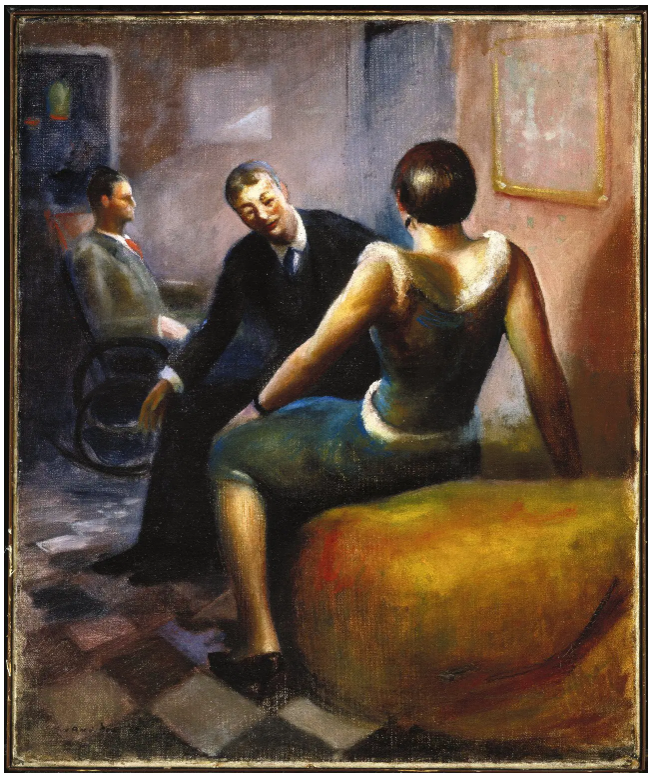
Evening by Guy Pène du Bois

There is a quiet courage in the work of re-seeing the world.
For many men, this work begins not with guilt or accusation, but with awakening — an honest recognition that much of what they were taught about love, success, and worth was filtered through lenses they never consciously chose.

Those lenses shape how they see women, how they see each other, and how they see themselves. To begin to notice those patterns is not weakness; it is the beginning of freedom.

This reflection is not about blame. It’s about understanding how culture shapes perception — and how men can reclaim their humanity by learning to see others, and themselves, more clearly.


The Inherited Lens: Hierarchy as Habit

Every man inherits a framework before he ever chooses one. From childhood, subtle messages define strength as dominance, emotion as fragility, and control as competence. These are not personal flaws; they are the scaffolding of culture itself.

Simone de Beauvoir described how societies often define men as the default — the doers, the decision-makers — while women are cast as the context, the mirror, or the support. This hierarchy doesn’t only limit women; it quietly confines men too. It isolates them from tenderness, empathy, and interdependence. It makes vulnerability feel like exposure rather than connection.

You can see this everywhere: in the workplace meeting where a man feels pressure to speak with certainty even when unsure; in the father who provides materially but hides his own exhaustion; in the friendship where warmth is replaced by banter because sincerity feels unsafe. These are learned reflexes, not truths about manhood.

Recognizing them isn’t self-criticism — it’s awareness. Hierarchy was never chosen; it was absorbed. Seeing through it becomes the act of rewriting it.


Objectification and the Loss of Depth

Objectification begins as a survival strategy — a way of managing complexity by reducing it to something we can control. It is not born from cruelty but from fear: fear of vulnerability, of rejection, of emotional overwhelm. For many men, objectification has been the only safe way to relate in a culture that punishes emotional openness.

From an early age, boys are taught to notice beauty before they are taught to notice humanity. They are rewarded for pursuit, praised for conquest, and rarely shown how to look at another person without desire or evaluation. This conditioning trains the eye to flatten — to turn the infinite depth of a person into a surface that can be categorized.

In this sense, objectification is not merely about sex. It’s a perceptual habit, a narrowing of sight. It can show up in how a man views women, but also in how he views himself — as a role, a provider, a performer — anything but a being.

Simone de Beauvoir called this “the reduction of the Other.” The woman becomes not an equal subject but a mirror for male identity. Yet in doing this, the man also becomes diminished. He trades intimacy for control, authenticity for image.

Maurice Merleau-Ponty’s philosophy of perception helps us see why this is so damaging. When the gaze becomes detached, it severs the relationship between body and soul, between self and world. The person looking loses the capacity for connection — not because he is incapable of love, but because his way of seeing has been trained to avoid depth.

To unlearn objectification, a man must learn to look longer — to see the human being behind his reflexes. This doesn’t mean rejecting attraction; it means letting attraction coexist with respect, curiosity, and wonder. It means learning to feel without possessing.

When he does, something shifts. What once felt like temptation becomes tenderness. What once triggered guilt becomes gratitude. He begins to understand that seeing another person as whole is not restraint — it is freedom.


Seeing as Participation — Merleau-Ponty and the Embodied Gaze

Maurice Merleau-Ponty taught that perception is not passive — it is participatory. To see something or someone is to be in relationship with it. We don’t look at the world; we look with it. The gaze itself is a form of contact.

When men begin to realize how their perception has been shaped — by media, by trauma, by cultural training — it can feel unsettling. Yet that very realization reveals the possibility of transformation. Because if perception is learned, it can also be relearned.

In a digital world, where images flash faster than empathy can form, men are taught to evaluate rather than encounter. Pornography, advertising, and social media train the eye to scan for desirability or power, not humanity. But something shifts when a man looks longer — when he pauses to really see a person instead of a projection. A simple act of attention can reawaken empathy, restoring depth where habit had flattened it.

Merleau-Ponty reminds us that to look with awareness is to engage ethically. The gaze can wound, but it can also heal. Every time a man chooses to see with curiosity rather than consumption, he reclaims the living quality of perception itself.


From Performance to Presence — Buber’s Call to Meeting

Martin Buber believed that all real living is meeting. He described two modes of relationship: I–It and I–Thou. In the I–It mode, people and things are treated as objects — useful, measurable, and often disposable. In the I–Thou mode, we encounter others as full beings, not categories.

Most men are conditioned to live in the I–It world. The culture of performance rewards decisiveness and control. A man learns to evaluate rather than experience — to measure his life by outcomes rather than intimacy. But this comes at a cost.

He might find himself sitting across from his partner but thinking about work; scrolling his phone instead of connecting at dinner; performing competence instead of expressing care. These are not failures of character — they are symptoms of disconnection.

When presence replaces performance, the dynamic changes. Listening becomes more powerful than solving. Eye contact becomes more healing than explanation. A man who learns to meet others without agenda steps into what Buber called the sacred space of encounter. In that space, both people are transformed.


Levinas and the Responsibility of Seeing

Emmanuel Levinas argued that ethics begins not in law but in encounter — in the face of another person. The face of the Other calls us to responsibility simply by existing. To truly see someone is to recognize their inherent dignity.

For men, this offers relief as much as responsibility. It removes the pressure to dominate or fix and replaces it with the invitation to care. Seeing becomes moral participation.

You can feel this difference in small, ordinary moments — choosing to stay in a difficult conversation rather than withdraw; recognizing the humanity in someone suffering on the street instead of looking away; responding to conflict with curiosity rather than defense.

Levinas reminds us that the eyes are ethical organs. To look at another human being and allow yourself to be moved by their vulnerability is not weakness; it’s moral strength. Presence itself becomes a form of protection — both for the other and for one’s own integrity.


The Desire to Care — From Protection to Partnership

Many men carry a sincere and beautiful desire to care for women — to protect, to support, and to make life easier for those they love. At its root, this impulse is not domination but devotion. It grows from empathy, loyalty, and the instinct to safeguard what matters most. Yet in a culture that confuses care with control, this tenderness can become distorted.

Protection can quietly slip into paternalism. Support can become substitution. Even when motivated by love, men may find themselves doing for women rather than walking with them — making decisions, offering advice, or solving problems in ways that unintentionally overlook or undervalue women’s insight and capability.

This isn’t cruelty; it’s conditioning. For generations, men were taught that their worth lay in their ability to provide, to lead, and to fix. Women, by contrast, were often expected to accommodate, nurture, and defer. When those scripts meet, imbalance hides beneath the surface of affection. The woman’s competence and wisdom can go underrecognized, while the man’s care goes unacknowledged for its sincerity. Both feel unseen.

As Simone de Beauvoir observed, inequality often persists not through open conflict but through subtle assumptions. The deeper problem isn’t overprotection; it’s under-crediting.

True care, as bell hooks reminds us, is not hierarchical. Love that liberates gives as much as it listens. It allows women’s voices to lead as often as men’s and recognizes that strength belongs to both.

Buber’s I–Thou relationship captures this transformation. In the I–It mode, care becomes management — an effort to ensure safety or order. In the I–Thou mode, care becomes communion — a willingness to stand beside another person, not above them.

Levinas would add that genuine responsibility honors the other’s autonomy. The face of another does not ask to be guided, but to be recognized. The ethical act is not to decide for her, but to stand with her — to affirm her full humanity.

When men care in this way, they do not lose their protective nature; they refine it. Care becomes partnership, protection becomes reverence, and love becomes equality embodied. This is not the end of masculinity — it is its maturity.

Fatherhood and the Protector Reflex

In family life, the desire to protect often reveals itself most vividly in moments of conflict. A father might hear his child speak sharply to their mother and instinctively raise his voice: “Don’t talk to your mother like that!”
On the surface, this seems noble — a defense of respect and love. Beneath it, though, is a deeper question about how protection and partnership coexist.

When a father steps in this way, he is often not defending his wife as a fragile being but defending the sacredness of respect itself. Yet when that defense takes the form of control — of correcting through dominance rather than connection — the message subtly shifts from “Respect your mother” to “Your mother needs my protection.”

This difference matters.
Children quickly internalize who holds authority, empathy, and voice in a home. When protection overshadows partnership, the mother’s authority can be unintentionally undermined — as though she cannot stand in her own strength.

True partnership looks different. It sounds like a father who, rather than commanding silence, models presence: “Hey, something feels tense here — let’s all take a breath.” It’s standing with his partner rather than over her. It’s backing her up without eclipsing her.

bell hooks wrote that love requires mutual recognition of power, not its suppression. In family life, this means protection transforms into respect when both parents’ voices carry equal weight.
Children learn best not from being silenced but from witnessing emotional integrity — a father’s capacity to protect without overpowering, to model firmness without hierarchy.

When a man learns to pause before stepping in — to ask whether his action preserves connection or reinforces control — he redefines protection itself. It becomes not an act of defense but of devotion. He is no longer guarding his partner; he is honoring her.


Love as Liberation — bell hooks and the Courage to Feel

bell hooks described love as “the practice of freedom.” She saw love not as sentimentality but as the daily discipline of seeing others as whole, autonomous beings rather than extensions of one’s ego.

For men, this redefines power entirely. Love becomes an act of courage — the strength to stay open, even when the world tells you to harden. It’s not about losing control, but about letting go of control as the measure of worth.

You can see this transformation in the father who learns to express affection that once felt awkward; in the friend who admits fear instead of hiding it behind humor; in the partner who listens without defensiveness and recognizes that understanding, not winning, is what restores connection.

Love, in this sense, is a way of seeing — an attention that liberates both the one who looks and the one who is seen. When men love in this conscious way, they don’t lose their strength; they deepen it. They move from protection to partnership, from guarding to giving.


Inheritance and Healing: The Work of Unlearning

Many men grew up in environments where tenderness was conditional, where strength meant silence, and where love was tangled with control. Those lessons don’t disappear with age; they live quietly in the nervous system, shaping how men relate to others and themselves.

To unlearn that inheritance is not to reject one’s past — it is to reinterpret it. Healing means understanding that discipline is not the same as distance, that leadership does not require hierarchy, and that emotional expression is not weakness but maturity.

In the workplace, this healing might look like leading through listening instead of intimidation. In fatherhood, it might look like gentleness that coexists with structure. In friendship, it might look like vulnerability that builds trust rather than shame.

When men begin to integrate these truths, they reclaim parts of themselves that were never lost — only hidden. They become whole enough to love without fear.


Practices for Embodied Change: How Men Can Relearn the Art of Seeing

Insight without practice can become another form of avoidance.
To truly shift from hierarchy to empathy, from performance to presence, men must not only think differently but live differently.
Change happens not through shame or pressure but through embodied, repeatable habits that retrain perception, soften the nervous system, and make love practical.

1. Begin with Awareness, Not Judgment

Pause before reacting. Notice the impulse — the tightening in the chest, the scanning eyes, the urge to control. That moment of recognition is not failure; it’s awakening. Ask yourself, What am I protecting right now — my image or my connection? Let awareness replace self-criticism.

2. Reclaim the Body as an Ally

Presence begins in the body. Practice somatic grounding: place a hand on your chest or abdomen and breathe deeply before responding. Movement and mindfulness reconnect emotion and embodiment, restoring empathy.

3. Practice “I–Thou” Encounters

Make eye contact in conversation. Listen to understand, not to fix. Replace performance with presence — say, “I don’t know” or “I care.” Each small act of genuine meeting resists dehumanization.

4. Expand the Lens

Ask, Who or what am I overlooking? Notice when hierarchy hides in habits — when you value voices like your own more than those that differ. This questioning is the essence of ethics.

5. Redefine Strength

True strength is emotional honesty. Practice admitting fear, confusion, or tenderness. Share one emotion daily that you’d normally suppress. Vulnerability builds, rather than weakens, trust.

6. Practice Gratitude for Growth

At day’s end, name one moment you chose connection over control. Transformation happens in these micro-movements of awareness and care.

7. Seek Dialogue and Mentorship

Healing thrives in community. Find other men committed to inner work. Speak the truth aloud. Brotherhood grounded in honesty is one of the most radical forms of resistance.

8. See Through Love

Love is a practice of perception. When you see someone, choose appreciation over possession, witness over withdrawal. Love with your attention — that’s how seeing becomes healing.


The Heart of It

Objectification is not hatred; it is disconnection. It’s the cultural habit of narrowing our vision until others — and we ourselves — become smaller than we are. But men are not bound to that way of seeing. They are capable of extraordinary empathy once they remember that to see is to touch, to meet, to love.

To see through Merleau-Ponty’s eyes is to know the world as living and responsive.
To see through Beauvoir’s critique is to notice how power distorts perception.
To meet through Buber’s lens is to rediscover the sacred in relationship.
To answer Levinas’s call is to let compassion become the first reflex.
And to love as bell hooks urged is to live with open eyes and an unguarded heart.

The opposite of objectification is not shame — it is presence.
And presence, practiced daily, is how men learn to see — and live — with love.


Author’s Note:
bell hooks styled her name in lowercase letters to emphasize the message over the self — a symbolic act of humility and a rejection of hierarchy. The lowercase “bell hooks” honors that intention and keeps focus on the spirit of her work: to center love, liberation, and consciousness over ego.


References

Beauvoir, Simone de. (2011). The Second Sex (C. Borde & S. Malovany-Chevallier, Trans.). Vintage Books. (Original work published 1949)

Buber, Martin. (1970). I and Thou (W. Kaufmann, Trans.). Scribner. (Original work published 1923)

hooks, bell. (2000). All About Love: New Visions. William Morrow and Company.

Levinas, Emmanuel. (1969). Totality and Infinity: An Essay on Exteriority (A. Lingis, Trans.). Duquesne University Press. (Original work published 1961)

Merleau-Ponty, Maurice. (1962). Phenomenology of Perception (C. Smith, Trans.). Routledge & Kegan Paul. (Original work published 1945)


Suggested Reading for Further Reflection

Gilligan, Carol. (1982). In a Different Voice: Psychological Theory and Women’s Development. Harvard University Press.

Noddings, Nel. (2013). Caring: A Relational Approach to Ethics and Moral Education (2nd ed.). University of California Press.

Young, Iris Marion. (1990). Throwing Like a Girl and Other Essays in Feminist Philosophy and Social Theory. Indiana University Press.

Katz, Jackson. (2013). The Macho Paradox: Why Some Men Hurt Women and How All Men Can Help. Sourcebooks.

Maté, Gabor. (2022). The Myth of Normal: Trauma, Illness, and Healing in a Toxic Culture. Avery.

A Glimpse Into the Global Neural Network: Could Our Brains Be Interconnected?

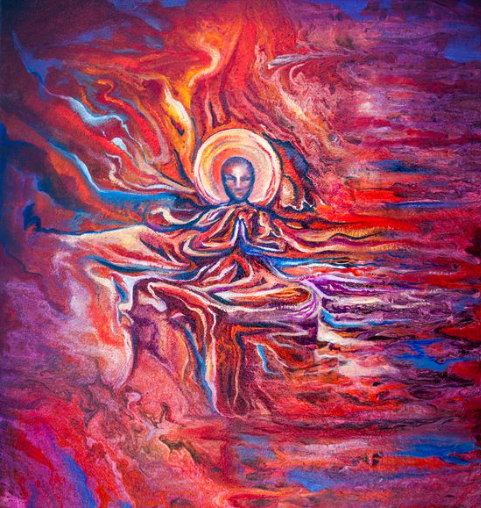
Connected Minds by Joe Brokerhoff

Recent reports have raised an extraordinary possibility: what if our brains are subtly connected through invisible electromagnetic threads? According to one popular summary, Princeton neuroscientists have used highly sensitive magnetometers to detect extremely low-frequency electromagnetic waves produced by the human brain. These patterns, the report suggests, are coherent and structured—and may even influence distant brains across thousands of kilometers.


What Neuroscience Actually Tells Us

While the Princeton claim remains unverified, there is a solid scientific basis confirming that the brain does emit electromagnetic fields. Techniques like magnetoencephalography (MEG) employ ultrasensitive magnetometers to map magnetic fields generated by neuronal currents in the brain. This is well-established technology used in both research and clinical settings.

These fields arise from synchronized activity of neurons—especially large groups firing together—and are detectable only with extremely sensitive equipment in controlled environments. Outside of specialized labs, ambient electromagnetic noise generally drowns them out.

There’s also emerging work on how extremely low-frequency (ELF) electromagnetic fields can influence neuronal processes. For example, exposure to ELF-EMF has been linked to changes in ion channel function and even neurogenesis in animal models.


Teilhard de Chardin’s Noosphere: A Planetary Mind

French philosopher and Jesuit priest Pierre Teilhard de Chardin (1881–1955) was both a theologian and a trained paleontologist, which gave him a unique lens to view human evolution—not just biologically, but spiritually and intellectually.

Teilhard proposed that evolution progresses through distinct layers:

  • The Geosphere – the physical, inanimate Earth.
  • The Biosphere – the layer of life, plants, and animals.
  • The Noosphere – a “thinking layer” that emerges once human consciousness and communication become complex enough to form a planetary web of thought.

In Teilhard’s view, the Noosphere is not metaphorical but a real, evolving stage of the planet’s development—an interconnected field created by the sum of human minds. As culture, technology, and communication advance, the Noosphere thickens, weaving tighter bonds between people across continents.

He envisioned this process culminating in the Omega Point—a state of ultimate unity in which human consciousness aligns with divine purpose, achieving maximum integration of knowledge, empathy, and awareness.

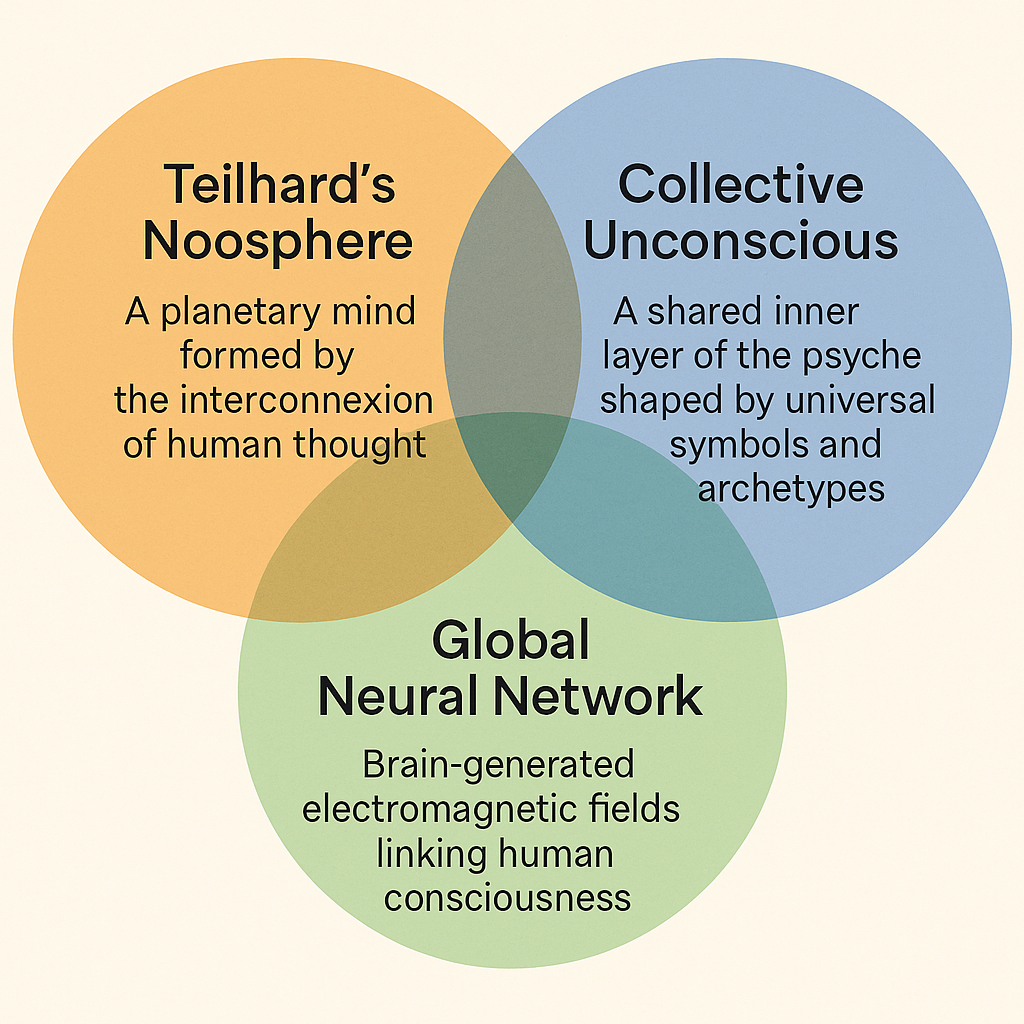
If today’s neuroscience is indeed showing that our brains create coherent electromagnetic fields that can interact over vast distances, Teilhard’s Noosphere could be seen as a philosophical precursor to the idea of a measurable “global neural network.” His work provides a spiritual and evolutionary map, while science may be revealing the wiring.


Carl Jung’s Collective Unconscious: A Shared Inner Landscape

Swiss psychiatrist Carl Jung (1875–1961) approached the question of interconnected minds from the inside out. He believed that beneath each person’s personal unconscious—which holds forgotten memories and repressed experiences—there is a collective unconscious, a shared psychic inheritance common to all humanity.

This collective unconscious contains archetypes—universal symbols and motifs such as the Mother, the Hero, the Shadow, and the Wise Old Man. These archetypes surface in myths, fairy tales, religious traditions, and dreams across cultures and time periods, even among people with no direct contact.

For Jung, this was evidence that human beings share a deep, pre-verbal layer of mind. It is not learned; it is innate. It shapes how we perceive, imagine, and respond to the world.

While Jung did not frame his theory in electromagnetic or physical terms, the overlap with today’s “global neural network” idea is striking. Jung saw our inner lives as partly communal, built on a shared psychological blueprint. If Teilhard’s Noosphere describes the outer, collective field of human thought, Jung’s collective unconscious describes the inner, symbolic content that moves within it.

In this way, modern neuroscience could be pointing to the biological infrastructure that allows both Jung’s and Teilhard’s visions to operate—not just as metaphors, but as lived human realities.


Why This Matters for Healing and Growth

In my own work as a counselor, coach, and educator, I have seen first-hand how human connection shapes personal transformation. Whether it’s in one-on-one sessions, group counseling, or community workshops, I help people tap into the deeper currents of their emotional and somatic experience—currents that may also resonate in the kind of global neural network scientists are beginning to imagine.

Through approaches like somatic breathwork, trauma-informed counseling, and creative expression, I guide clients in attuning to themselves and, by extension, to the subtle ways they are connected to others. When we align our inner rhythms, we often find more empathy, more clarity, and more courage to live authentically.

If science is pointing to a real, measurable link between our brains, it could explain why shared experiences—whether joyful, painful, or deeply transformative—can ripple outward and create change beyond the individual. It reinforces the truth I see every day: your healing is never just your own.


Let’s Explore This Together

If the idea of a connected human consciousness resonates with you, and you’re ready to explore your own healing and growth in a way that honors mind, body, and connection, I would love to work with you.

You can learn more about my services and schedule a consultation at www.dr-kat.org/work-with-dr-kat, or reach out directly by email at help@dr-kat.org.

Your journey may just be part of a much larger story—one that spans not only hearts and minds, but perhaps even the invisible waves that connect us all.

Transforming Pain into Liberation: Discovering the Wisdom of Non-Attachment in Zen Stories

Have you ever wondered how to turn your pain and suffering into a source of liberation and wisdom? Here, l explore the profound teachings of Zen stories that reveal the power of non-attachment in transforming our experiences. Join me on a journey towards understanding how letting go can lead to true freedom and enlightenment. Get ready to uncover the secrets of turning pain into liberation through the ancient wisdom of Zen philosophy.

Introduction: Overview of the concept of non-attachment in Buddhism and its relation to pain

Buddhism is a spiritual tradition that originated in ancient India and is based on the teachings of Siddhartha Gautama, also known as the Buddha. One of the central principles in Buddhism is the concept of non-attachment, which refers to letting go of our attachments to material possessions, relationships, and even our own thoughts and emotions. It is believed that by practicing non-attachment, one can free themselves from suffering and achieve inner peace.

In Buddhism, pain or suffering (known as dukkha) is seen as an inevitable part of life. Every human being experiences pain at some point in their lives – whether physical, emotional or psychological. However, what sets Buddhist philosophy apart from other belief systems is its emphasis on the relationship between attachment and suffering.

According to Buddhist teachings, our attachments are like chains that bind us to the cycle of suffering. We become attached to things we desire or fear losing – be it material possessions, relationships or even certain beliefs about ourselves. When these attachments are threatened or taken away from us, we experience pain and distress.

Non-attachment does not mean avoiding relationships or detaching oneself from responsibilities. Rather it means cultivating a mindset where we do not cling onto things with a sense of ownership or control. This helps us let go when necessary without causing unnecessary pain and suffering.

The wisdom behind non-attachment can be seen through many Zen stories that illustrate how detachment leads to liberation from pain. These stories often depict characters who have learned the value of letting go through their own experiences with loss and change.

One such story is about a wise old man who lived alone in the mountains with his son. The son accidentally left the door open one day which allowed their horse to escape into the wild. When villagers came by to offer sympathy for his loss, he simply replied “Maybe”. Later when the horse returned with a herd of wild horses, the villagers congratulated him on his good fortune, to which he replied “Maybe”. His son tried taming one of the wild horses and ended up breaking his leg. Again, when the villagers offered their sympathies, the old man simply replied “Maybe”. Later when soldiers came to conscript young men for war and couldn’t take his son because of his injury, the villagers praised his luck once again. The wise old man’s response remained unchanged – “Maybe”.

This story beautifully demonstrates how non-attachment can prevent us from experiencing pain caused by constantly clinging onto outcomes or circumstances. By accepting that things are impermanent and out of our control, we can free ourselves from suffering and find peace within.

What is Non-Attachment? Explanation of the Buddhist principle of non-attachment and how it differs from detachment.

In Buddhism, attachment is seen as one of the main causes of suffering. When we attach ourselves to external things or ideas, we create expectations and desires that can never be fully satisfied. This leads to disappointment, frustration, and ultimately suffering when those attachments are not met. Non-attachment teaches us to let go of these attachments and find freedom from their endless cycle of craving and dissatisfaction.

But how does non-attachment differ from detachment? Detachment implies a sense of indifference or apathy towards something or someone. It suggests a lack of connection or involvement with the world around us. In contrast, non-attachment involves an understanding and acceptance that everything is impermanent and constantly changing. By letting go of attachments, we are not detached but rather deeply connected with life itself.

The Buddhist term for attachment is “upadana,” which translates to “clinging” or “grasping.” On the other hand, non-attachment is referred to as “viraga,” which means dispassion or absence of passion. This highlights the idea that non-attachment is not about suppressing our emotions but rather approaching them with equanimity – neither attaching nor detaching from them.

To illustrate this concept further, let’s look at an example from one of Zen’s most famous stories – The Two Arrows Parable.

In this story, a man gets shot by two arrows – one physical arrow causing him immense pain and another mental arrow causing him additional suffering through his thoughts about it. The first arrow represents unavoidable pain in life while the second symbolizes our attachment to it. The man’s reaction reflects how most of us deal with pain – we often focus on the second arrow, causing ourselves more suffering.

However, a wise man in the story advises the man to remove the second arrow by letting go of his attachment to its pain. This is not detachment but rather non-attachment, where one acknowledges and experiences pain without adding an extra layer of suffering through attachments.

In essence, non-attachment teaches us to embrace impermanence and find liberation from our attachments. It allows us to live in this moment fully and experience life as it is rather than chasing after what we want or avoiding what we don’t want. By understanding this wisdom, we can transform our pain into liberation and find true peace within ourselves.

The Role of Pride and Ego: Discussion on how pride and ego contribute to attachment and ultimately, pain.

Pride and ego are two powerful forces that play a significant role in our lives. They are often seen as sources of strength and motivation, driving us to achieve success and recognition. However, when it comes to attachment, pride and ego can become obstacles on the path of self-discovery and liberation.

In Zen teachings, attachment refers to the deep-rooted desire for something or someone. This desire is fueled by our pride and ego, which constantly seek validation from external sources. We attach ourselves to material possessions, relationships, achievements, and even our own identities because we believe they define who we are.

Our pride tells us that we need these things to feel worthy and important. It feeds our ego with thoughts of superiority and invincibility. As a result, we cling onto them tightly, fearing that if they were taken away from us, we would be left with nothing.

However, this attachment only brings suffering in the end. The more attached we are to something or someone, the more pain we experience when we lose them or when they no longer meet our expectations. Our pride and ego cannot handle rejection or failure; thus, they create a constant state of fear within us.

In Zen philosophy, non-attachment is considered the key to true liberation from suffering. It involves letting go of our attachments – material possessions, relationships, achievements – as well as our attachment to our own identity. Non-attachment does not mean detachment or indifference; rather it means being free from dependence on anything external for happiness.

Zen stories often illustrate how pride and ego lead people astray from the path of non-attachment. In one story about a wealthy man who was attached to his wealth and status in society until he lost everything due to war – including his family – only then did he find true peace through embracing non-attachment.

Similarly, another story tells of a man who was highly attached to his reputation but found freedom when he let go of his pride and ego. These stories remind us that true liberation can only be achieved when we are free from the bonds of our own attachments.

Pride and ego contribute to attachment which ultimately leads to pain and suffering. The wisdom of non-attachment teaches us to let go of these harmful forces and find true liberation in the present moment.

Zen Tale Analysis: In-depth analysis of the Zen tale

The Zen tradition is rich with tales and stories that offer profound insights into the human experience. These stories, known as koans, are often used in Zen practice to stimulate critical thinking and challenge our preconceived notions of reality. One particular type of koan is the Zen tale, which typically revolves around a simple yet powerful message that can help us gain clarity and insight into our lives.

In this section, I will delve deeper into the world of Zen tales and analyze their meaning and significance. I will explore how these stories can serve as valuable tools for transforming pain and suffering into liberation through the wisdom of non-attachment.

Again, at its core, the essence of Zen teachings is about letting go of attachments – whether it be to material possessions, desires, or even our own thoughts and emotions. This idea is beautifully illustrated in many Zen tales where characters are faced with challenging situations that require them to let go of their attachments in order to find peace and liberation.

One such tale is “The Empty Cup,” which tells the story of a university professor who sought out a famous master to learn about Zen. The master poured tea for his guest but kept pouring until it overflowed from the cup onto the table. The professor exclaimed that the cup was full and could hold no more tea, to which the master replied,

“Like this cup, you are full of your own opinions and speculations. How can I show you Zen unless you first empty your cup?”

This simple yet powerful tale highlights how our attachment to our own beliefs and ideas can prevent us from being open to new perspectives or understanding.

Another popular tale in Zen tradition is “The Parable of the Raft,” where a teacher compares spiritual teachings to a raft that helps one cross over a river but should not be mistaken for being an end goal itself. The main message here is not becoming attached even to spiritual practices or beliefs as they may become hindrances on our path to liberation.

Through the analysis of these stories and many others, we can see how Zen tales offer a deeper understanding of the concept of non-attachment and its role in alleviating suffering. They teach us to let go of our attachments and be present in the here and now, without clinging to ideas or expectations.

Letting Go: Practical tips for letting go

1. Acceptance: The first step towards letting go is accepting reality as it is without judgment or resistance. In one Zen story, a student asked his master how to find peace amidst chaos. The master replied, “It’s like standing in front of a mirror with anger written on your forehead; you will see only anger reflected back at you.” This story teaches us that when we accept our emotions instead of fighting them, we can find inner peace.

2. Mindfulness: Being present in the moment allows us to observe our thoughts without getting caught up in them. In another Zen tale, a samurai warrior seeks advice from a monk about how to handle his anger towards an enemy who insulted him. The monk instructs him to write down the insults on paper but not send it until after ten days if he still feels angry. After ten days, the samurai realizes that his anger has subsided because he was mindful enough not to react impulsively.

3. Gratitude: Letting go also involves being grateful for what we have instead of focusing on what we lack or have lost. One day a man went to Buddha complaining about his problems despite having everything he wanted materially. Buddha advised him always to look at those who have less than him rather than those who have more as it would cultivate gratitude within him.

4.Enjoyment without attachment: Zen teaches us to enjoy things without clinging to them. In a Zen story, a monk was offered a beautiful ruby by a king. Instead of keeping it, he put it in his bowl and used it as an offering at the temple. When asked why he did not keep such a valuable treasure for himself, the monk replied that he enjoyed its beauty but did not want to be attached to something so temporary.

By accepting reality, being present in the moment, practicing gratitude and enjoying without attachment, we can gradually cultivate non-attachment and transform our pain into liberation. As Zen master Thich Nhat Hanh said, “Letting go gives us freedom; freedom only exists when we stop craving.” So let us start letting go today and find true liberation within ourselves.