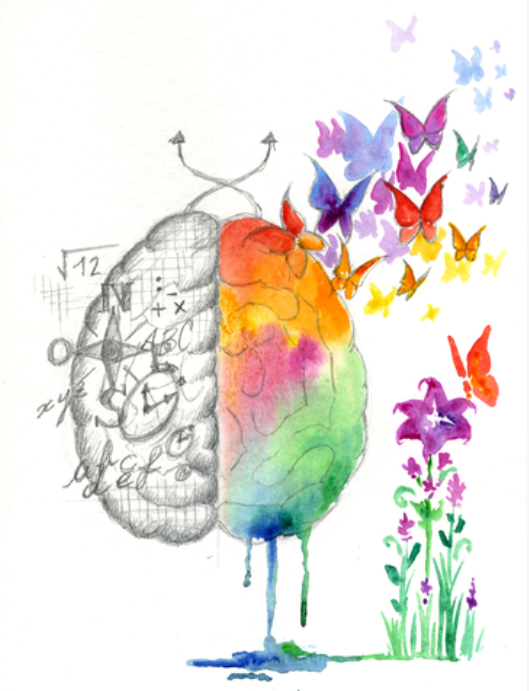
The Hidden Potential Within: Accessing the Brain’s Right Hemisphere to Our Higher Self

Do you ever feel like life’s challenges are weighing you down, leaving you feeling lost and overwhelmed? What if I told you that there is a higher version of yourself – your Higher Self – ready and waiting to guide you through these tough times? Here, I explore how tapping into your Higher Self can help navigate the ups and downs of life with grace and ease.

The concept of the higher self and its role in navigating life’s challenges

The concept of the higher self has been explored for centuries by various spiritual traditions and philosophies. It can be described as a part of ourselves that exists beyond our physical body and ego. Some may refer to it as the soul or spirit while others may see it as a deeper level of consciousness. Regardless of how one defines it, the common belief is that our higher self holds infinite wisdom, knowledge, and an unbreakable connection to a greater universal energy.

So why is this concept relevant in navigating life’s challenges? Our higher selves have the ability to provide us with guidance, strength, clarity, and inner peace during difficult times. It acts as a compass that guides us towards our true purpose and authentic self.

In today’s fast-paced world where we are constantly bombarded with distractions and expectations from society, it can be easy to lose touch with our higher selves. We may become consumed by our thoughts, emotions or external circumstances which can cloud our judgement and hinder us from making decisions aligned with our true desires.

However, when we tap into our higher selves through practices such as meditation, mindfulness or journaling; we gain access to a deeper level of awareness. This allows us to detach from the chaos around us and tune into our intuition – our internal GPS system that leads us towards what truly serves us.

Moreover, connecting with your higher self means connecting with your true essence – who you are at your core without any societal conditioning or limiting beliefs. This enables you to approach life’s challenges with a sense of inner strength, confidence and resilience. You become less affected by external circumstances and more in tune with your inner power to overcome any obstacle that comes your way.

Understanding the Right and Left Hemispheres of the Brain: How they represent different aspects of our being

The human brain has always been a topic of fascination and study for scientists, psychologists, and philosophers alike. It is the hub of our consciousness, thoughts, emotions, and actions. While each individual’s brain is unique in its own way, there are some general characteristics that can be attributed to all brains. One of these characteristics is the division of the brain into two hemispheres – the right hemisphere and the left hemisphere.

To understand how we navigate life’s challenges with our higher self as a guide, it is essential to first understand the functions and roles of these two distinct hemispheres.

The Left Hemisphere:
The left hemisphere is commonly referred to as the ‘logical’ or ‘analytical’ side of the brain. It primarily deals with language skills, logic, reasoning, and critical thinking. This side of the brain helps us in understanding patterns and solving problems systematically. It also controls movement on the right side of our body. While both hemispheres have the same core abilities, this side is the only side capable of speech.

Apart from these logical functions, the left hemisphere also plays a crucial role in controlling our sense of self-identity and ego. It constantly compares us to others and seeks validation from external sources such as achievements or material possessions.

The Right Hemisphere:
In contrast to the left hemisphere’s analytical nature, the right hemisphere is often described as being more intuitive and creative. This side of the brain helps us with tasks such as recognizing faces or interpreting non-verbal cues like body language or tone of voice. The right hemisphere also enables us to think outside-the-box by making connections between seemingly unrelated concepts.

Moreover, this part of our brain houses our emotions and empathy towards others. It allows us to experience compassion towards ourselves and others without judgment or comparison.

How they represent different aspects:
Though both hemispheres have their unique functions and roles in shaping who we are, they work together collaboratively rather than independently. For instance: while reading this blog post (which requires logical thinking), your left hemisphere will be more active. However, if you start imagining yourself in a challenging situation, your right hemisphere will take over to help you process emotions and empathy.

Our higher self is deeply connected to our right hemisphere as it represents our innermost feelings and values. It guides us towards self-awareness, compassion, and authenticity by helping us tap into our intuition and creativity.

Understanding the roles of the left and right hemispheres of our brain can aid us in navigating life’s challenges with greater ease. By recognizing which side of the brain we are operating from in a given situation, we can consciously tap into aspects of our being that may not be as prominent. This holistic approach allows us to make better decisions and lead a more fulfilling and authentic life with our higher self as a guide.

What is the Higher Self?: Defining and explaining the concept

The concept of the Higher Self is one that has been explored and debated by philosophers, spiritual leaders, and individuals seeking a deeper understanding of their own existence. It is often seen as a guiding force, an inner wisdom or knowing that transcends our physical being. But what exactly is the Higher Self and how can it help us navigate life’s challenges?

At its core, the Higher Self can be understood as our truest essence or soul. It is the part of us that exists beyond our ego and conscious mind – beyond our fears, doubts, and limiting beliefs. Some may refer to it as the divine spark within us or our connection to a higher power.

The idea of the Higher Self originated in ancient spiritual traditions such as Buddhism, Hinduism, and Taoism. These teachings suggest that each individual has an eternal self or consciousness that exists beyond this physical realm. In more recent times, psychologists like Carl Jung have also delved into this concept through his exploration of archetypes and the collective unconscious.

So why is understanding your Higher Self important? The answer lies in its role as a guide for navigating life’s challenges. When we are faced with difficult situations or decisions, it can be easy to get caught up in our thoughts and emotions. Our ego may lead us down paths based on fear or societal expectations rather than what truly aligns with our authentic selves.

Connecting with our Higher Self allows us to tap into a source of wisdom that goes beyond these external influences. It helps us see things from a broader perspective and make choices that are aligned with our deepest values and desires.

One way to think about this is through the metaphor of a mountain. From ground level, we may only see one path up the mountain – full of obstacles and challenges. But when we climb higher, we gain a bird’s eye view where we can see multiple paths leading to the top – each with its own set of obstacles but ultimately leading to the same destination. Our Higher Self serves as this higher vantage point, providing us with a clearer understanding of our journey and the choices that will ultimately lead us to our desired outcome.

In essence, the Higher Self is our inner compass, pointing us towards growth, healing, and fulfillment. It is always present within us, waiting for us to connect and tap into its infinite wisdom.

The Right Hemisphere of the Brain is Your Higher Self

In the realm of neuroscience, a particularly intriguing phenomenon is the idea that the right hemisphere of the brain, despite lacking speech capabilities, still possesses a form of communication that can be interpreted as “speaking” in its own unique way. Case histories have revealed instances where individuals exhibit distinct personalities associated with each hemisphere, leading to the notion that there are essentially two selves residing within one person. It is believed that while the left hemisphere typically dominates in terms of language processing and verbal expression, the right hemisphere may communicate through nonverbal means such as emotions, gestures, and imagery.

It is postulated that the right hemisphere serves as a reservoir of untapped potential, waiting to be accessed if one is receptive and open to exploring its depths. The keyword here lies in openness – a willingness to embrace uncertainty and relinquish control over conventional modes of thinking. By fostering an environment conducive to spontaneity and novelty, individuals may harness the power of their second self residing within the right hemisphere. Through practices such as meditation, artistic expression, or simply engaging in free-flowing thought processes, one can begin to unlock this hidden reservoir of creativity and insight that lies dormant within each of us. In doing so, we embark on a journey towards greater self-discovery and personal growth as we tap into the vast expanse of possibilities that reside within our own minds.

Benefits of Having Your Higher Self as a Guide: How it can help you navigate through difficult situations

Having your higher self as a guide can be an invaluable asset when facing difficult situations in life. Your higher self is the part of you that is connected to your inner wisdom, intuition, and spiritual guidance. It is the purest and most authentic version of yourself, free from ego and societal conditioning. When you allow your higher self to guide you, you tap into a source of infinite knowledge and strength that can help you navigate through any challenge with grace and ease.

One of the major benefits of having your higher self as a guide is increased clarity and perspective. When faced with difficult situations, we often feel overwhelmed and clouded by our emotions and thoughts. This can make it challenging to see things clearly or make sound decisions. However, when we tune in to our higher selves, we are able to rise above these limiting factors and gain a broader perspective on the situation. Our higher selves can offer us insights and guidance that may not be apparent in our current state of mind.

Additionally, having your higher self as a guide can help you access inner peace amidst chaos. Life’s challenges can bring about feelings of stress, anxiety, or fear. But by connecting with our higher selves, we are able to tap into an inner sense of calmness and trust in the universe’s plan for us. This allows us to approach difficult situations from a more centered place rather than being consumed by negative emotions.

Furthermore, having your higher self as a guide enables you to make choices aligned with your highest good. Our society often encourages us to prioritize external validation or material success over our own well-being. However, when we let our higher selves lead the way, we are able to discern what truly serves us on a soul level rather than what society dictates as important.

Having our higher selves as guides also strengthens our connection with ourselves on a deeper level. By tuning in regularly with our inner wisdom through practices such as meditation or journaling, we become more attuned to our desires, values, and purpose. This allows us to make decisions in alignment with who we truly are, rather than being swayed by external influences.

Navigating Challenges with Your Higher Self

Your higher self is the part of you that is connected to your true purpose, wisdom, and intuition. It is the part of you that knows exactly what you need in any given situation. By tapping into this inner guidance system, you can find clarity, direction, and strength to face any challenge with confidence.

Here are some ways to connect with your higher self during challenging times:

1) Meditation: The practice of meditation allows us to quiet our minds and tune into our inner selves. It helps us become more aware of our thoughts and emotions, allowing us to let go of negative patterns and connect with our intuition. Make time for daily meditation or try guided meditations specifically focused on connecting with your higher self. Through the practice of meditation, individuals we the ability to tap into this lesser-known side of their cognitive capacity and unlock its full potential. By engaging in mindfulness techniques such as focused breathing or visualization, we can quiet the chatter of our conscious mind and allow space for the intuitive wisdom housed within the right hemisphere to come forth. In doing so, one may experience heightened creativity, enhanced problem-solving abilities, and a deeper connection to their innermost thoughts and emotions. The act of meditating serves as a bridge between our conscious selves and this subconscious reservoir of knowledge and insight that lies dormant within us all.

2) Journaling: Writing down your thoughts and feelings can be a powerful tool for connecting with your higher self. Set aside dedicated time each day to write about your challenges and ask yourself questions such as ‘What lesson am I meant to learn from this?’ or ‘What does my higher self want me to know right now?’ By delving into free associative writing, we can stimulate the right hemishphere, this elusive part of their psyche, and access a wealth of insights that may otherwise remain hidden. Free associative writing involves allowing thoughts to flow freely without censorship or inhibition, tapping into the subconscious mind and unraveling layers of underlying emotions and ideas. Through this process, we can cultivate a deeper understanding of ourselves and gain profound insights that can inform their daily lives and decision-making processes.

3) Trusting Your Intuition: Your intuition is the voice of your higher self guiding you towards what is best for you. When faced with a challenge, listen closely to those gut feelings or subtle nudges in a certain direction. Trusting your intuition can lead you towards the right path. By tapping into our intuitive capacity through trusting our instincts, we can gain access to a wealth of valuable information that may not be readily available through rational analysis alone. Intuition allows us to make quick decisions based on gut feelings or hunches that are informed by subconscious cues and past experiences. Research suggests that individuals who are able to effectively utilize their right hemisphere have enhanced problem-solving abilities and are better equipped to navigate complex social situations. Developing trust in our intuition can lead to greater self-awareness and emotional intelligence, ultimately contributing to overall well-being and personal growth.

4) Self-Reflection: Taking time for introspection allows us to look within ourselves for answers instead of seeking validation from external sources. Ask yourself what your higher self would do in this situation and listen to the response that comes from within. Through processes such as self-reflection, we have the capacity to tap into our “second self” and explore aspects of our innermost thoughts, emotions, and perceptions. By engaging in introspective practices, we gain deeper insights into our own consciousness and identity. The right hemisphere’s involvement in these processes underscores its role in facilitating subjective experiences and promoting holistic understanding of one’s own psyche. Through reflection and contemplation, we are able to uncover hidden truths about ourselves and enhance our overall sense of self-awareness.

5) Practicing Gratitude: When facing challenges, it can be easy to focus on the negative aspects of a situation. However, by practicing gratitude, we shift our perspective and become more open to receiving guidance from our higher selves. Take a few moments each day to reflect on things you are grateful for, no matter how small. By expressing gratitude regularly, we can stimulate activity in the right hemisphere of our brain, strengthening its connections and enhancing its functionality. This heightened state of awareness can lead to increased feelings of joy and fulfillment as we become more attuned to the positive aspects of our lives. Research has shown that individuals who engage in gratitude practices experience improved mental health outcomes such as reduced stress levels and increased resilience in the face of adversity. Ultimately, by harnessing the power of gratitude to access our second self within the right hemisphere of our brain, we have the potential to cultivate a greater sense of peace and contentment in our lives.

Navigating life’s challenges with your higher self as a guide is not always easy, but it is incredibly rewarding. Remember to be patient and kind with yourself during the process as connecting with your higher self is a journey that takes time and practice. Trust that your inner wisdom will always lead you towards growth and empowerment. Embrace your higher self as your greatest ally in navigating life’s challenges.

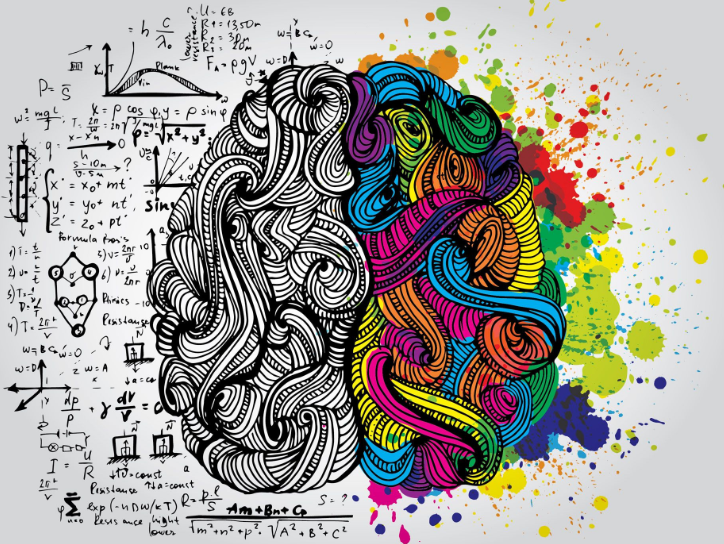
Harnessing the Power of Thought Energy: How Your Thoughts Affect Your Reality

Have you ever felt like your thoughts have a life of their own? Like they control your mood and behavior, even if you don’t want them to? Well, it turns out that our thoughts are more powerful than we might think. In fact, they can shape our reality in ways we never imagined possible. From improving relationships to achieving success in work and personal life, harnessing the power of thought energy is the key to unlocking unlimited potential.

What is Thought Energy?

Thought energy is the force that powers our thoughts. It is the energy that we use to think, feel, and act. Our thoughts are like waves of energy that flow through our minds, and they affect our reality.

When we focus our thoughts on positive things, we attract positive experiences into our lives. When we focus on negative things, we attract negative experiences. Our reality is a reflection of our thoughts.

Scientifically speaking, thoughts are energy, and energy particles all have a frequencey. Like frequency attracts like frequency. So, if we want to create a positive reality, we need to fill our minds with positive thoughts. By doing this, we can attract more positive experiences into our lives.

Thought energy is the power of creation that we all possess. It’s a powerful tool that can help us manifest our dreams and desires. When we understand how to use thought energy, we can create a life that is abundant with love, joy, and abundance.

The Different Types of Thought Forms

There are different types of thought forms, each with its own unique power to affect your reality.

Mental thought forms are created by the power of the mind. They can be used for positive or negative purposes, depending on the intention of the creator. Mental thought forms are often used to influence others or to manifest goals.

Emotional thought forms are created by the power of emotions. They can be used for positive or negative purposes, depending on the emotion that is being channeled into them. Emotional thought forms are often used to attract or repel people and situations.

Etheric thought forms are created by the power of the soul. They can be used for positive or negative purposes, depending on the intention of the creator. Etheric thought forms often have a life of their own and can be difficult to control.

Astral thought forms are created by the power of the stars. They can be used for positive or negative purposes, depending on the alignment of the stars at the time of their creation. Astral thought forms are often used to influence events and bring about change.

All four types of thought forms have the power to shape your reality if you focus on them for long periods of time. It’s important to remember that all thoughts are powerful, so it’s important to be mindful of what kind of thoughts you’re thinking.

Resource – (Thought Forms: A Record of Clairvoyant Investigation)

Examples of How Thoughts Can Change Your Life

If you want to change your life, start with changing your thoughts. It really is that simple. But it’s not always easy to do. Here are some examples of how changing your thoughts can change your life:

If you want to be happier, think more positive thoughts.

If you want more money, think about abundance instead of lack.

If you want better health, think about being healthy and feeling good.

If you want to attract love, think about love and what it feels like to be loved.

The possibilities are endless. Just remember, whatever you focus on expands. So if you want to change your life, start by changing your thoughts (then link those to feelings!)

Does Thought Energy Affect Our Reality?

Our reality is a direct reflection of our thoughts and beliefs. Every thought we have creates an energetic vibration that emits into the Universe and attracts experiences that match that frequency. In other words, our reality is created by our thoughts.

Changing our thoughts can be difficult because we have years of conditioned thinking patterns that have become deeply ingrained. However, it is possible to change our thinking patterns and create a new reality for ourselves.

The first step is to become aware of our thoughts. Once we are aware of our thoughts, we can start to question them. Why do we believe what we believe? Are our beliefs serving us or holding us back? When we start to question our beliefs, we open up the possibility of changing them.

The next step is to focus on positive, empowering thoughts. What do you want to create in your life? What kind of person do you want to be? Start thinking about what you want instead of what you don’t want. As you focus on positive thoughts, your vibration will begin to shift and you will start attracting experiences that match your new vibration.

It takes practice and consistency to change your thoughts and create a new reality for yourself, but it is well worth the effort.

How to Harness the Power of Thought Energy

  1. Be aware of your thoughts. Pay attention to your thoughts throughout the day. What are you thinking about most of the time? Are your thoughts positive or negative?
  2. Choose your thoughts wisely. You have the power to choose what you think about. So why not choose thoughts that will improve your life and make you happy? Pay attention to your thoughts. What you think about on a daily basis has a big impact on your reality. Be mindful of your thoughts and make sure they are positive and uplifting.
  3. Focus on what you want, not on what you don’t want. When you focus on what you want, you attract it into your life. But when you focus on what you don’t want, you actually create more of it in your life.
  4. Visualize what you want. See yourself achieving your goals and living the life you want in your mind’s eye. The more vividly you visualize it, the more likely it is to become a reality in your life.
  5. Meditation can help quiet the monkey mind and allow you to focus more easily on what you want to achieve. Take some time each day to sit quietly and meditate on your goals and visions.
  6. Take action towards your goals. Thoughts alone won’t manifest anything in your life unless you take action towards your goals. In addition to focusing your thoughts on what you want, it is also important to take action steps towards achieving it. This will help move you closer to bring your desires into reality. Do not worry about solving problems however (those problems will be solved through your new alignment of self). Instead, make room for the things coming your way.
  7. Believe in yourself. Believe that you can achieve anything you set your mind to. It’s based in science after all! The world is tipped in your favor (postive thoughts hold more energy than negative thoughts.) Have faith and never give up on yourself—you are capable of greatness.

By following these steps, you can harness the power of thought energy and create the life you want through intention.

Conclusion

Ultimately, it is important to remember that our thoughts are powerful and can have a direct impact on our lives. We must be mindful of what we think and how those thoughts manifest into reality. With practice and dedication, we can learn how to harness the power of thought energy in order to create positive change in our lives. By doing this, we can unlock new possibilities for ourselves that will help us reach higher levels of wellbeing, success, and fulfillment.

Break Bad Habits with the Power of Neuroplasticity and Quantum Mechanics

Are you tired of feeling stuck in bad habits that seem impossible to break? Do you wish there was a way to rewire your brain and create lasting change? Well, the good news is that it is entirely possible! Thanks to the power of neuroplasticity and quantum mechanics, we have the ability to transform our thoughts, behaviors, and identities. Here I explore how these two concepts work together to help us break free from harmful patterns and live more fulfilling lives.

Introduction to Neuroplasticity and Quantum Mechanics

Neuroplasticity is the brain’s ability to adapt and change in response to experience. It is a relatively new field of study that is providing insight into how we can break bad habits and learn new ones.

Quantum mechanics is the branch of physics that studies the behavior of matter and energy at the atomic and subatomic levels. It is helping us to understand how the universe works at a fundamental level.

Recent research has shown that neuroplasticity and quantum mechanics are connected. This means that our thoughts and beliefs can influence the physical world around us. This has profound implications for our ability to change our behavior and create the lives we want.

There are three key things to understand about neuroplasticity and quantum mechanics:

1) Our thoughts create our reality. What we believe is what we will experience.

2) We have the power to change our thoughts and beliefs. We are not stuck with negative thinking patterns or harmful habits.

3) The changes we make in our thinking will be reflected in changes in our reality. As we shift our thoughts, our circumstances will also shift.

How Neuroplasticity Works

Neuroplasticity informs us that the brain is constantly rewiring itself in response to our thoughts, emotions, and behaviors. The more we engage in certain thoughts, emotions, and behaviors, the more we strengthen the neural pathways associated with them. This is why it’s so important to be aware of our thoughts and actions – because they literally shape our brains!

Quantum mechanics is the branch of physics that studies the behavior of matter and energy at the subatomic level. It’s based on the idea that particles (like atoms and photons) can exist in more than one state simultaneously. This means that particles can be in two places at once, or have two different properties at the same time.

So how does this all relate to breaking bad habits? Well, remember how I said that our thoughts, emotions, and behaviors shape our brains? Quantum mechanics tells us that everything is made up of energy – including our thoughts. So when we focus our thoughts on changing a bad habit, we’re actually changing the energy pattern associated with that habit. And as we know from neuroplasticity, when we change the way we think about something, we can change the way our brain works.

So if you’re looking to break a bad habit, quantum mechanics says it’s possible! Just focus your thoughts on changing your behavior, and you’ll start to see results.

How Quantum Physics Affects Your Life

Quantum mechanics focuses on the behavior of matter and energy at the atomic and subatomic levels and introduces us to the theory of wave-particle duality. Yes, quantum mechanics has led to the development of technologies like lasers, transistors, and semiconductors, and has provided scientists with a greater understanding of the universe at its smallest level, but it is also applicable in our day to day lives, very applicable. Here are three ways quantum physics affects you:

  1. Your brain is a quantum computer.

The human brain is an incredibly powerful computer, capable of storing and processing vast amounts of information. And, according to some researchers, it may actually be a quantum computer.

In a quantum computer, information is stored in qubits (quantum bits). Qubits are units of quantum information that can exist in more than one state simultaneously. This allows for massive parallel processing, which is why quantum computers are so powerful.

Your brain uses something called neural networks to store information. Neural networks are groups of interconnected neurons that work together to process information. It’s believed that each neuron in a neural network behaves like a qubit, meaning your brain may be able to store and process information in a similar way to a quantum computer.

  1. Quantum entanglement is at work in your body.

Quantum entanglement is a phenomenon where two particles, such as photons or atoms, become linked so that they share the same quantum state. This means that when one particle changes its state, the other one will change too, regardless of the distance between them. This phenomenon has been demonstrated in experiments and could be happening inside your body.

The cells in your body are made up of molecules which contain electrons and protons that may be entangled with each other. When this happens, information can be shared between them faster than the speed of light, allowing for instantaneous communication between different parts of your body. This could explain why you feel an itch on your nose even if you’re not touching it.

  1. Quantum effects shape how proteins fold in your cells.

Proteins are essential to life, and they are responsible for many of the biological processes that occur inside our bodies. But to do their job properly, proteins need to fold into complex shapes with specific regions exposed so they can interact with other molecules in the cell. It turns out that quantum effects play an important role in this process.

Research shows that when proteins start to fold , they can get stuck in a quantum superposition of different states. This is known as a “quantum tunneling” effect and it allows proteins to explore different shapes simultaneously, which helps them find the most stable configuration. Without this process, proteins may not be able to fold correctly and could become dysfunctional.

So, as you can see, quantum physics is all around us and affects our lives in ways we don’t even realize. It’s amazing how such tiny particles can have such a big impact on our lives!

Strategies for Breaking Bad Habits Using Neuroplasticity and Quantum Mechanics

Together, these two powerful forces (Neuroplasticity and Quantum mechanics) can be harnessed to break bad habits and create new, positive ones. Here are some strategies for doing just that:

  1. Understand how your brain works. Knowing how neuroplasticity and quantum mechanics work will give you a better chance of using them to your advantage.
  2. Be patient. Change takes time, so don’t expect miracles overnight. Keep at it and you will see results. That is a guarantee.
  3. Be consistent. In order for change to occur, you need to be consistent in your efforts. This means sticking to your new habit even when it’s tough or you don’t feel like it.
  4. Visualize success. Use the power of visualization to help you reach your goals. See yourself succeeding and breaking those bad habits for good!
  5. Reward yourself. Celebrate your successes and reward yourself for your hard work. This will help keep you motivated and on track.
  6. Get help if you need it. Sometimes we need a bit of extra support or guidance when trying to break bad habits. Don’t be afraid to reach out for help if you need it. Here’s a free guidebook to get you started:
  7. Track your progress. Keep track of your successes and any setbacks you have experienced. This will help you to stay motivated and understand where you need to make adjustments.

Examples of How to Use Neuroplasticity and Quantum Mechanics to Break Bad Habits

  1. If you’re trying to quit smoking, start by visualization. See yourself as a nonsmoker, living a healthy life full of energy and vitality. Every time you have the urge to smoke, take a deep breath and visualize yourself as a nonsmoker. This will help retrain your brain to see smoking as something that is not part of your identity.
  2. If you’re trying to lose weight, start by setting realistic goals. Instead of telling yourself that you need to lose 20 pounds in one month, set a more achievable goal like losing 5 pounds in one month. Once you reach your goal, celebrate your success! This will help train your brain to see weight loss as something that is possible for you.
  3. If you’re trying to improve your memory, start by using mnemonic devices. A mnemonic device is anything that helps you remember information more easily. For example, if you need to remember the order of the planets in our solar system, you could use the acronym “My Very Easy Method Just Speeds Up Naming Planet Saturn” (Mercury , Venus, Earth, Mars, Jupiter, Saturn). This will help your brain learn to better recall information.
  4. If you’re trying to break a bad habit like procrastination or negative self-talk, try using quantum mechanics and the principle of superposition. That means actively thinking about all the potential outcomes of your decisions before you make them. This will help your brain understand that there is always a choice, and it’s up to you to decide which path you want to take.

By using neuroplasticity and quantum mechanics, you can retrain your brain to break bad habits and create healthier ones. By setting realistic goals, visualizing success, and actively thinking about potential outcomes, you can build new neural pathways that will help you achieve your goals.

Linking your feelings with your new thoughts is the KEY to success with this process. Also, if you want to assure you do not fall back into self-sabotaging behaviors, you have to understand your default system, that system you established in your brain that keeps you moving in destructive cycles. Click here for a free guidebook to get this process started. You are in control!

Conclusion

While it might seem intimidating, taking advantage of the power of neuroplasticity and quantum mechanics to break bad habits is something that anyone can do. By understanding how these concepts work together, you can make lasting changes in your life that will pay off both mentally and physically. With a few simple steps, you can begin to rewire your brain for success and create healthier habits that will benefit you for years to come. Start the process now: