
Dreams as Messengers: What Nighttime Narratives Reveal About Your Inner Life

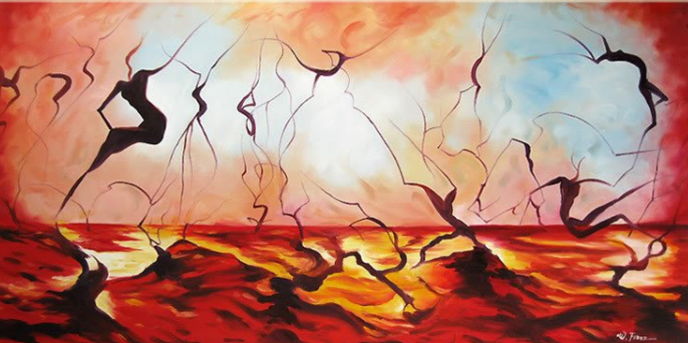
Dream Time by Uttam Bhattacharya

What if the bizarre, vivid, or even distressing dreams you experience weren’t random at all—but were instead meaningful messengers, surfacing from the depths of your subconscious to guide, warn, or reveal? Across psychology, spirituality, and philosophy, dreams have long been viewed as more than nighttime entertainment—they are tools of insight, healing, and revelation.


The Brain’s Way of Working Things Out

From a neurological perspective, dreams are not aimless. Research suggests that during REM sleep, our brains continue to solve problems, regulate emotions, and consolidate memory. According to Carl Jung, dreams are a natural expression of the unconscious—the psyche’s effort to bring balance and understanding through symbolic communication. We might not be consciously aware of a dilemma, but our brains often are, and dreams are one of the ways our minds nudge us toward resolution.

That frustrating dream of being chased, failing an exam, or missing a flight? It may not be about the literal content at all, but a metaphor for stress, decision paralysis, or fear of failure that’s surfacing because your conscious mind is too overwhelmed or too distracted to process it during waking hours.


Messages in a Bottle: Montague Ullman’s Theory of Dreams

Montague Ullman (1916–2008) was a psychiatrist and psychoanalyst best known for his groundbreaking work in dream theory and group dreamwork. Ullman believed dreams were not merely products of the id or subconscious discharge but communicative acts—messages in a bottle sent from the self to the self. According to Ullman, dreams function as internal mail, offering emotional truth that bypasses our intellectual defenses.

He championed the idea that dream interpretation should be democratic and community-based. Through dream-sharing groups, Ullman emphasized the value of collective wisdom in decoding dreams. Rather than pathologizing or medicalizing them, he invited people to explore their dreams with curiosity and emotional honesty, viewing each dream as a meaningful commentary on one’s lived experience.


The Recurring Dream Loop

When dreams repeat—whether it’s being trapped, falling, or teeth crumbling—they’re like a psychological ping that something still needs attention. Recurring dreams often indicate unresolved conflict, trauma, or patterns that have yet to be integrated or addressed.

The 20th-century French philosopher Gaston Bachelard explored the poetic and recurring nature of dreams in The Poetics of Reverie. He believed dreams, especially recurring ones, served as invitations to revisit emotional truths hidden beneath surface awareness. Bachelard wrote that dreams are not only echoes of our past, but “images that ask to be born anew in consciousness.”

Processing a recurring dream involves journaling, emotional reflection, and noticing patterns across time. Ask yourself:

  • What emotions am I resisting in waking life?
  • What is the underlying fear or longing behind this dream?
  • Has anything about the dream changed since I last had it?

Bringing awareness to the dream’s emotional tone and symbolic content often softens its repetition. Recurring dreams rarely stop because we analyze them—they stop because we integrate what they’re trying to teach us.


Prophetic Dreams and the Role of Intuition

Some dreams seem to tap into something beyond time—an intuitive awareness of what is happening beneath the surface or even what is to come. This isn’t always about clairvoyance but rather the emergence of information not yet processed consciously.

Heart-based research supports the idea that the body—especially the heart—is a seat of intuitive knowing. According to the HeartMath Institute, the heart has its own intrinsic nervous system, sometimes called the “heart-brain,” which processes information independently of the cerebral brain. Studies have shown the heart responds to stimuli seconds before they appear, suggesting a form of intuitive foresight. In this sense, prophetic dreams may reflect the heart’s ability to sense subtle energy shifts in our relationships, environments, or health long before our conscious minds register them.


Trauma Revisited in the Dream Space

Unresolved trauma often finds its way into dreams, especially when waking life begins to feel safe enough to explore it. A woman who was cheated on may dream repeatedly of her spouse in new affairs, not because it’s happening again, but because her psyche is still trying to make sense of the betrayal, the loss of trust, and the fracturing of her identity.

Conversely, a man who has cheated and lost his wife as a result may experience nightmares of abandonment, rage, or seeing his family torn apart. These dreams aren’t about punishment but are a manifestation of unprocessed grief, shame, and guilt. The dream becomes a mirror—reflecting both what happened and what the dreamer still carries inside.

This scenario can also give rise to complex, layered dreams in which multiple timelines play out—alternate lives where the betrayal never happened, or where healing was possible. These parallel dream-worlds may point to the emotional ambivalence within the dreamer: regret, longing, and the wish to undo what cannot be undone.

Philosopher Søren Kierkegaard explored such internal conflict in relation to despair and the multiplicity of the self. He argued that part of being human is reconciling these opposing inner states—hope and regret, freedom and consequence. Dreams allow for this reconciliation to happen symbolically, playing out what the conscious mind cannot resolve.


Dreams in Addiction Recovery: Including Sexual Addiction

Freud famously interpreted dreams as wish fulfillment—a way for the unconscious to safely act out desires that the waking ego represses. In addiction recovery, dreams about using substances may reflect lingering cravings or guilt around past behaviors. But they are not signs of relapse. They are the psyche detoxing its internal landscape.

Carl Jung, in contrast, viewed dreams as part of the individuation process—a symbolic roadmap for the integration of the self. Jung would likely view dreams of relapse or destructive behaviors not as shameful, but as the unconscious presenting the shadow self, asking for attention, compassion, and transformation.

In recovery from sexual addiction, dreams may include imagery of past behaviors, unresolved desires, or even shame-inducing content. These are not regressions but reflections of healing-in-process. They may be an invitation to reclaim parts of the self that were numbed or fragmented during active addiction.

To process these dreams:

  • Reflect on what the dream may be trying to communicate about unmet needs or fears.
  • Practice self-compassion rather than shame.
  • Bring the dream into therapy or group work, where symbolic themes can be safely explored.

Philosophers on Dreams: Expanded Perspectives

  • Plato believed dreams were glimpses into the soul’s true desires. In The Republic, he described dreams as unchained expressions of inner impulses and argued that the just person could control dreams as a measure of moral integrity.
  • Aristotle, more empirical, saw dreams as physiological processes influenced by digestion and temperature, yet still acknowledged their capacity to reflect emotional states and signal bodily imbalance.
  • Descartes questioned the reliability of dreams entirely, using them to illustrate the fallibility of sensory experience and launching the philosophical query: How can we know we’re not dreaming now?
  • Nietzsche saw dreams as echoes of archaic human instinct. He believed dreams brought us in contact with primordial forces and the “Dionysian” side of the psyche—a vital counterbalance to rationality.
  • Krishnamurti held that dreams were a reflection of inner disorder and that true clarity arises only when the mind is silent, not cluttered with interpretation. He emphasized dream observation rather than analysis.

Each philosophical view adds nuance to the nature of dreams—whether as moral mirror, biological feedback, existential challenge, or spiritual insight.


How to Work with Dreams

Working with dreams begins in the present moment. Instead of chasing meaning, start where you are—with the feelings, symbols, or questions that arise when you wake.

Eckhart Tolle teaches the power of now—the idea that transformation begins when we fully inhabit the present moment. Dreams often point to the places where we’re not present—where we’re caught in old stories, regrets, or fears. Use them as anchors to return to yourself.

Tips:

  • Keep a dream journal by your bed and write as soon as you wake.
  • Look for patterns, symbols, and emotional themes over time.
  • Share dreams in trusted spaces—therapy, dream groups, or with a mentor.
  • Practice mindfulness to increase dream recall and integrate insight.

Dreams are not problems to solve. They are invitations—to feel, to remember, to imagine, and ultimately, to awaken. What messages are your dreams sending you tonight?

The Science and Philosophy of Sound: How Music Helps You Manifest Your Dreams

It is no secret that music has the power to move us in ways that words alone cannot. But did you know that there is actually scientific evidence to support the idea that music can help us manifest our dreams? Here, I explore the fascinating science behind sound and how it plays a vital role in helping us achieve our goals.

Introduction to Manifestation and Music

There are countless ways that music can help you manifest your dreams. It can raise your vibration, open your heart, and increase your focus and concentration. But what is manifestation, and how does it work?

Manifestation is the process of bringing something into form. It is the act of making your desires and intentions real. And while it may seem like a magical process, there is actually a science to it.

Here’s how it works: everything in the world is made up of energy. This includes our thoughts, emotions, and actions. When we align our thoughts, emotions, and actions with our desires, we create a powerful force that attracts what we want into our lives.

Music is a powerful tool for manifestation because it can help align our energy with our desires. When we listen to music that makes us feel good, we raise our vibration. And when we raise our vibration, we attract more of what we want into our lives.

So if you want to manifest your dreams, start by finding music that makes you feel good. Focus on the feelings that you want to experience more of in your life, and let the music take you there.

How Sound Can Align the Mind, Body, and Spirit

The power of the subconscious mind is vast and often underestimated. The subconscious mind is responsible for governing our automatic processes, like breathing and heart rate, as well as our more creative functions, like dreaming and imagination. By tapping into the power of the subconscious mind through music, we can access a wealth of untapped potential.

Music has the ability to create powerful emotions. When we listen to music that makes us feel happy, excited, or loved, we are opening ourselves up to positive energy that can help us attract what we desire. On the other hand, if we allow ourselves to get caught up in negative emotions like fear or anger, we may find it harder to manifest our desires.

In his book The Power of Intention, Dr. Wayne Dyer talks about the surprising ways in which our thoughts and intentions can manifest in our lives. One example he gives is of a woman who was trying to sell her house. She had been trying unsuccessfully for months, and was getting very discouraged. Then she heard about the power of intention and decided to try it. She put a sign in her front yard that said “I intend to sell my house.” Within two weeks, she had several offers and sold her house for more than she had asking price.

The power of intention is based on the law of attraction, which says that like attracts like. When we put our attention on something, we attract more of it into our lives. So if we want to manifest our dreams, we need to focus on them with intention.

One way to do this is through sound. Sound waves are vibrational energy, and they can help to align our own vibration with that of our desired intention. When we hear a certain sound or type of music, it can shift our mood and help us to focus on what we want to achieve.

There are many different ways to use sound for manifestation. You can listen to affirmations or positive statements about what you want to achieve, either in your own voice or someone else’s. Or you can play music that makes you feel good and supports your goals. You can even create your own sounds using instruments like singing bowls or drums.

What is the Science Behind Manifestation Through Music?

The science behind manifestation through music is based on the fact that sound waves are a form of energy. This energy can be used to influence our thoughts, emotions, and physical reality. When we listen to music, our brainwaves change in response to the rhythm and frequency of the music. This change in brainwave activity can alter our state of consciousness, which can lead to changes in our thoughts, emotions, and physical reality.

Some people believe that certain types of music are more effective for manifestation than others. However, there is no scientific evidence to support this claim. It is important to choose music that you enjoy and that has a positive or uplifting message. The most important thing is to focus your intention on what you want to manifest while you are listening to the music.

The Power of Music and Existentialism

Existentialism is a philosophical and psychological movement that stresses the existence of the individual self and the subjective experience of life. It emphasizes the unique experience of the individual, rather than the universal experience.

Existentialism is a response to the disconnection that people feel in the modern world. It is a way of thinking that allows us to confront life’s challenges with authenticity and courage. The goal of existentialism is to help us find meaning in our lives. It is not so focused on finding answers to life’s big questions but rather about accepting the lack of answers and engaging with life in spite of this uncertainty.

Existentialism also offers an approach to living authentically. It encourages us to take full responsibility for our lives and to make conscious choices without relying on external sources of guidance. Existentialists believe that we can find meaning in our lives through relationships with other people, creating art and music, engaging in meaningful work, and striving for personal growth.

In existentialism, the individual’s starting point is characterized by what has been called “the absurd”: the human situation is experienced as incongruous with the individual’s deepest values and aspirations. In light of this, the individual must make a conscious decision to fashion a life that gives meaning to his or her existence. This requires an authentic existence, in which the individual is true to him- or herself, rather than living in bad faith—a mode of living in which one denies or distorts one’s true nature.

One way to achieve an authentic existence is through art, specifically music. Music can be a powerful tool for self-expression and self-discovery, helping us to access our emotions and tap into our creative potential. It can also be a form of meditation, providing a space for us to quiet our mind and connect with our innermost thoughts and feelings.

When we create or listen to music with intention, we can use it as a tool for manifesting our deepest desires. By aligning our vibration with the frequencies of the Universe, we can attract all sorts of abundance into our lives—including love, joy, abundance, success, and anything else we might desire. The key is to remain open and receptive to all that comes our way, without attachment or expectation.

Existentialism is often seen as a negative philosophy, due to its focus on the dark side of human existence. However, it can also be seen as a positive philosophy, because it emphasizes the importance of individual freedom and choice. Music is one of the most powerful forms of expression, and it can be used to express both positive and negative emotions.

In the context of existentialism, music can be seen as a way to make sense of the world around us. It can help us to understand our own emotions, and it can also provide a source of comfort during difficult times. Music can therefore be seen as an important tool for manifesting our own existence.

How To Use Music to Enhance Your Manifestations

If you want to manifest more money, you would listen to songs with empowering lyrics about abundance and wealth. Or if you’re looking for love, you would play tunes that make you feel happy and in the mood for romance.

You can also use music to get rid of negative energy and make space for positive vibes. Simply listening to uplifting or relaxing melodies can help clear your mind and open up your heart so that you’re ready to receive all the good things life has to offer.

Benefits of Using Music for Manifestation

There are many benefits to using music for manifestation. One of the most important benefits is that it can help you to align your frequency with your desired outcome. When you are in alignment, you are a match for what you desire and it becomes much easier to bring your dreams into reality.

Another benefit of using music for manifestation is that it can help to raise your vibration. The higher your vibration, the closer you are to achieving your desires. Music can also help to release any blockages that are preventing you from manifesting your dreams.

Music can help to create a powerful intention. Intention is one of the most important factors in manifestation. When you set a strong intention while listening to music, you are much more likely to achieve your goal.

Finally, music can help to bring positive emotion into your life. Positive emotions attract positive results and this can really help to increase the chances of manifesting your dreams.

Conclusion

Music has the power to not only lift your spirits but also help you manifest your dreams. By understanding how sound waves interact with energy fields, we can use music as a tool to create and attract positive vibrations that will allow us to reach our goals. The science of sound is an amazing thing and something we should all take advantage of in order to make our lives better. The exploration of existentialism and the art of manifesting through music shows that there is much more to consider than we may have initially thought. Music can help us make sense of our environment, express our innermost feelings, and even shape how we perceive the world around us. By examining scientific and philosophical concepts in relation to music, we can open up a whole new realm of possibility for ourselves and use it as an invaluable tool for personal growth.So whether you’re looking for motivation or relaxation, don’t be afraid to explore the science of sound and start using music as a powerful vehicle towards manifesting your dreams!

Hell as a State of Mind: Understanding Kabbalistic Teachings on the Afterlife

Have you ever wondered what happens after we die? Is there really a fiery pit of eternal torment awaiting us in the afterlife, or is the concept of hell more complex than that? If you’re curious about exploring different perspectives on this age-old question, get ready to delve into the fascinating world of Kabbalistic teachings on the afterlife. Here, I explore how Kabbalah views hell not as a physical place but rather as a state of mind – one that can be transcended through spiritual growth and understanding. I compare this concept with Christian perspectives and Jean -Paul Sartre’s interpretation of hell in his famous play, No Exit.

Introduction to Kabbalistic Teachings on the Afterlife

Kabbalists believe that the afterlife is a state of mind. After we die, our soul goes through a process of purification. We are first judged by God, and then we are sent to either heaven or hell. However, Kabbalists believe that hell is not a physical place. Instead, it is a state of mind that we create for ourselves.

Kabbalists teach that the after life is divided into two parts: Gehinom and Gan Eden. Gehinom is the purgatory where our souls are purified after death. This is where we suffer for our sins and learn lessons from our mistakes. After we have been purified in Gehinom, we are allowed to enter Gan Eden, which is the paradise where we will live forever with God.

There are different levels of Gan Eden, and which level we enter depends on how pure our soul is. The highest level is called Atzilut, and this is where those who have lived righteous lives will go. The next level down is called Beriah, and this is for those who were not as righteous but still led good lives. The lowest level of Gan Eden is called Yetzirah, and this is where those who led evil lives will go.

Kabbalistic teachings on the afterlife emphasize the importance of living a good life on earth. By living a good life and purifying our soul, we can ensure that we will enter into the highest level of heaven after we die.

Kabbalists also believe in reincarnation, which is the idea that after we die, our soul is reborn into another body. This is seen as an opportunity for us to learn from our mistakes and grow spiritually.

Kabbalistic Parable of Hell and Heaven: The Banquet and Long Spoons

The Parable of the Banquet and Long Spoons is a well-known parable that depicts the concept of heaven and hell. In this parable, a man was taken to both places by an angel. In Hell, he saw people sitting around a table with long spoons tied to their hands. They were all hungry and miserable because they couldn’t feed themselves due to the length of the spoon handle.

Conversely, in Heaven, he witnessed another group of people sitting at a banquet table with long spoons attached to their hands as well; however, they were fed and happy even though they could not use those spoons for feeding themselves. The difference between these two scenarios lies within one keyword – cooperation.

In Heaven, individuals used their assigned utensils to feed each other instead of focusing on their own needs alone. As such, everyone was satiated and contented despite having limited access to food through individual means only. However, in Hell’s case where ego dominated over selflessness-people tried selfishly eating from spoon but unable which led them into starvation and misery ultimately.

Thus it can be said that cooperative behavior leads towards mutual benefit rather than just satisfying our personal desires or goals which is what we should strive for as social beings living together in society while striving for happiness & prosperity collectively rather than alone. By understanding the symbolism behind the banquet and its longer spoons, one can gain insight into what it means to take responsibility for one’s actions and make decisions that will bring one closer to one’s spiritual goals.

Kabbalah & Jean Paul Sartre’s No Exit: A Comparison

In the Jewish tradition, the afterlife is a very real and integral part of existence. In the Kabbalah, it is believed that there are different levels of hell, each corresponding to a different level of sin. For example, those who have committed serious crimes will be sent to the lowest level of hell, while those who have only minor offenses will be sent to a higher level.

Interestingly, Jean Paul Sartre’s play No Exit also deals with the idea of different levels of hell. In the play, three characters are stuck in a room together for eternity and each must come to terms with their own personal hell. While there are some similarities between Kabbalistic teachings on the afterlife and Sartre’s play, there are also some significant differences.

For one, in the Kabbalah, it is believed that there is hope for redemption even after death. This is not the case in Sartre’s play, where the characters are condemned to their own personal hells forever. In the Kabbalah, it is believed that each person has their own individualized afterlife experience based on their actions in life. Kabbalah focuses on the hope of redemption after death, while No Exit is a stark reminder of the consequences of our actions in life. Additionally, Kabbalah teaches us that each person has an individualized afterlife experience, while in No Exit, all three characters experience the same Hell regardless of their actions on Earth.

Ultimately, Kabbalah and No Exit both remind us that our actions have consequences, and that we should strive to lead a life of righteousness.

Exploring the Christian Perspective of Hell

Christians have long believed in the existence of hell as a place of punishment for sinners. However, there is debate among Christians about what exactly hell is and how it functions. Some believe that hell is a literal place where people are sent after they die to suffer for their sins. Others believe that hell is more of a state of mind, a spiritual condition that results from being cut off from God.

Kabbalistic teachings on the afterlife offer a different perspective on hell. According to Kabbalah, hell is not a physical place but rather a spiritual realm. It is a realm of intense darkness and separation from God. Those who find themselves in hell have cut themselves off from the light of God and are lost in a state of ignorance and confusion.

Hell is not necessarily a permanent state, however. Kabbalists believe that it is possible for those in hell to eventually return to the light of God. But this requires making a conscious effort to turn away from the darkness and towards the light. For most people, this process takes many lifetimes.

While there are some differences in opinion, both Christians and Kabbalists believe that there is a relationship between heaven and hell. For Christians, heaven is a place of reward for those who have accepted Christ, while hell is a punishment for those who have not. Kabbalists believe that heaven can be reached through good deeds, while hell is the result of evil deeds. Ultimately, both perspectives teach that our actions here on earth can affect our afterlife in either positive or negative ways.

So, while Christians may disagree about the specifics of hell, Kabbalah provides a different perspective that can be helpful in understanding the concept. Hell may not be literal, but it is still very real for those who are caught in its grasp.

The Relationship Between Hell & Heaven in Kabbalah

Kabbalists believe that every person has a spark of the divine within them, and it is our job to nurture and grow that spark. When we do good deeds and think positive thoughts, we are aligning ourselves with the Light of the divine. This brings us closer to God and creates a state of heaven within us.

Conversely, when we sin or engage in negative thinking, we are pushing ourselves away from the Light. This creates a state of hell within us. It is important to note that this hell is not a physical place outside of ourselves, but rather a state of mind that we create for ourselves.

The good news is that even if we have created a state of hell for ourselves, it is always possible to turn back towards the Light and thus return to heaven. Kabbalah teaches that our individual journey is not just about reaching heaven or avoiding hell – it is about constantly growing closer to God through our actions and thoughts.

Ultimately, the relationship between hell and heaven in Kabbalah is not about a destination, but rather a journey of spiritual growth.

Exploring Life as a Reflection of Our Afterlife

In the kabbalistic tradition, life is seen as a reflection of our afterlife. This means that our actions in this life have an impact on our future lives. If we live a life of righteousness, we will be rewarded in the afterlife. If we live a life of sin, we will be punished in the afterlife.

This idea is based on the belief that God is just and fair. He wants us to live good lives so that we can enjoy the rewards of the afterlife. However, He also knows that we are human and that we make mistakes. That’s why He gives us second chances in the form of reincarnation.

If we don’t learn our lessons in this life, we will have to come back and try again in another life. This cycle will continue until we get it right. Ultimately, it is up to us to determine our own fate.

The kabbalistic tradition also teaches us that our thoughts and emotions are powerful. Positive thoughts and emotions will bring us closer to God, while negative ones will push us away. Consequently, it is important to focus on the positive aspects of life in order to create a better afterlife for ourselves.

Ultimately, life is a reflection of our afterlife. What we do in this life has an effect on our fate in the next one. Therefore, it is important to be mindful of how we live and what legacy we leave behind – for the sake of both our present and future lives.

How To Achieve Heaven Through Our Actions on Earth

Kabbalists teach that our actions on earth directly affect our state in the afterlife. If we want to achieve heaven, we need to be mindful of our actions and make choices that will lead us there.

There are a few things we can do to help ensure that we end up in heaven. First, we need to live a life of purpose and meaning. This means living in alignment with our values and pursuing activities that make us feel good and contribute to the world in a positive way. Second, we need to cultivate positive relationships with others. This means treating others with kindness, compassion, and respect. Third, we need to let go of attachments to material possessions and focus on what truly matters in life. When we die, none of our earthly possessions will come with us; it’s only our relationships and spiritual state that will matter.

If we can keep these things in mind, we stand a good chance of achieving heaven after we die. By living a life of purpose and meaning, cultivating positive relationships, and letting go of attachments, we can create Heaven on Earth for ourselves and those around us.

Conclusion

In conclusion, Kabbalistic teachings on the afterlife offer us a unique perspective on understanding what hell is and how it should be interpreted. Through the lens of Kabbalah, we can understand that hell is not necessarily an external place of punishment but rather a state of mind within our own souls. While this may seem difficult to accept at first, by exploring these ideas further and reflecting upon them in our daily lives, we can come to terms with our mortality and recognize that heaven and hell lie within ourselves.