
The Mirror Stage and Destructive Behaviors: How Lacan Explains Self-Sabotage

Have you ever found yourself engaging in self-destructive behaviors that seem to go against your best interests? Maybe you repeatedly engage in toxic relationships, procrastinate on important tasks, or struggle with addiction. If so, you’re not alone. Many people experience some form of self-sabotage at different points in their lives.But why do we engage in these destructive patterns when they clearly harm us? According to the psychoanalyst Jacques Lacan, it all comes down to our relationship with our own reflection. In this blog post, I explore Lacan’s theory of the mirror stage and how it can help one understand the root causes of self-sabotage.

Introduction to the Mirror Stage

Lacan’s “mirror stage” is a key concept in his theory of the human psyche. It occurs when an infant first sees itself in a mirror and recognizes that it is a separate entity from the rest of the world. This realization leads to a sense of self-awareness and a need to control one’s environment.

The mirror stage is a crucial time in development, as it sets the stage for future relationships with others. If the experience is positive, it can lead to a healthy sense of self-esteem and confidence. However, if the experience is negative, it can lead to feelings of insecurity, anxiety, and even self-destructive behaviors.

Self-sabotage is one such destructive behavior that can be traced back to the mirror stage. When an individual feels insecure or unworthy, they may subconsciously engage in activities that undermine their own success. This could manifest as procrastination, self-doubt, or even sabotaging relationships.

While the mirror stage is not the only cause of self-destructive behaviors, it can be a contributing factor. Understanding this dynamic can help individuals who struggle with these issues to gain insight and develop healthier coping mechanisms.

How Lacan Explains Self-Sabotage

Many people are familiar with the concept of self-sabotage, but they may not know that there is a psychological explanation for it. In his theory of the mirror stage, Lacan suggests that self-sabotage is a result of our internalized sense of inadequacy.

When we look in the mirror, we see an image of ourselves that is idealized and perfect. This image is created through the process of identification, where we take on the characteristics of others in order to feel like we belong. However, this idealized image is only an illusion; in reality, we are flawed and imperfect.

This discrepancy between our idealized self and our actual self can lead to feelings of anxiety, insecurity, and low self-esteem. In an attempt to protect ourselves from these feelings, we may engage in self-sabotaging behaviors. For example, we might procrastinate on important tasks or avoid social interactions. We do this because we believe that if we can’t live up to our idealized image, then it’s better not to try at all.

Ultimately, self-sabotage is a way of protecting ourselves from the pain of failure. It’s a defense mechanism that keeps us from facing our fears and taking risks. While it may seem like a helpful coping strategy in the short-term, it ultimately prevents us from achieving our goals and living a fulfilling life.

The Role of Identification in Destructive Behaviors

According to Lacan, the mirror stage occurs during the first few years of life, when the child first becomes aware of its own reflection in a mirror. This realization that it is a separate entity from others leads to a sense of insecurity and anxiety, which the child attempts to alleviate by identifying with an idealized image of itself. This process of identification is continued throughout life, and serves as the basis for the development of ego and self-image.

However, Lacan also believed that this process of identification is inherently flawed. Due to the fact that we can never achieve an accurate representation of ourselves, our sense of identity is always incomplete and unsatisfactory. This can lead to feelings of frustration, inadequacy, and even self-loathing.

It is these negative feelings that often drive people to engage in destructive behaviors. In an attempt to escape their own sense of inadequacy, they may turn to drugs or alcohol, become involved in risky behavior, or develop eating disorders. Ironically, these behaviors only serve to further damage their sense of self-worth and reinforce their feelings of inferiority.

Lacan’s theory provides a helpful explanation for why people with low self-esteem are more likely to engage in self-destructive behaviors. By understanding the role of identification in the development of our sense of self, we can gain a better understanding of how certain patterns of behavior can reinforce negative feelings and lead to further psychological damage.

The Impact of Social Norms on Destructive Behaviors

Lacan’s theory of the mirror stage posits that individuals develop a sense of self through their interactions with others. This process is often fraught with difficulty, as people must confront the ways in which they are different from others. These differences can lead to feelings of inferiority, which can in turn lead to destructive behaviors.

Social norms play a significant role in this process, as they dictate what is considered acceptable behavior. When someone behaves in a way that is outside of the social norm, they are often met with disapproval or even punishment. This can further reinforce feelings of inferiority and lead to more destructive behaviors.

It is important to note that not all social norms are negative or harmful. Some social norms, such as those related to safety or hygiene, help to protect individuals from harm. However, other social norms, such as those related to appearance or success, can be damaging if they are not achievable by everyone. It is possible to change harmful social norms, but it requires a concerted effort from individuals and society as a whole.

The Role of Unconscious Desires in Self-Sabotage

It is no secret that our unconscious desires can often lead us to self-sabotage. Whether it’s procrastination, comfort eating, or any other number of destructive behaviors, we often find ourselves doing things that we know are bad for us because we are driven by an unconscious desire.

When a child first sees themselves in a mirror and recognizes that they are a separate individual from the rest of the world, this recognition is accompanied by a sense of lack or incompleteness, as the child realizes that they are not perfectly whole like they thought they were. This sense of lack leads to a lifelong quest to attain perfection and completeness.

We often try to fill this void through relationships, possessions, or achievements, but none of these things can truly fill the emptiness inside us. As a result, we can often find ourselves engaged in self-destructive behaviors as we try to achieve something that is ultimately unattainable.

So next time you find yourself engaging in a destructive behavior, ask yourself what it is you are really trying to achieve. Chances are it has more to do with your unconscious desires than you realize.

Strategies for Overcoming Destructive Behaviors

Lacan’s theory of the mirror stage posits that we develop a sense of self by seeing ourselves reflected in others. This process is fraught with potential for error, as we may come to see ourselves in a distorted way. When our self-image is based on a distorted view of ourselves, we may engage in self-destructive behaviors in an attempt to conform to this image.

There are several strategies that can be used to overcome destructive behaviors stemming from a distorted self-image. First, it is important to become aware of the ways in which our self-image may be inaccurate. We can then work to develop a more realistic and accurate view of ourselves. Additionally, we can seek out supportive relationships with others who see us in a more positive light. We can strive to treat ourselves with kindness and compassion, even when we make mistakes.

By using these strategies, we can start to move away from destructive behaviors and towards a more healthy and fulfilling life.

Conclusion

Through his concept of the mirror stage, Lacan provides an insightful way to understand why we might engage in self-sabotaging behaviors. Knowing how these feelings of alienation and lack work together helps us to identify when we are engaging in destructive behavior and gives us the tools to make healthier choices. As with any new concept, it’s important that you take some time to reflect on what this means for your own life before making drastic changes. However, understanding Lacan’s insights into the mirror stage can be a valuable tool for increasing our self-awareness and potential for personal growth.
Transcending Perception: Biblical Foundations of Samadhi

Have you ever felt like there’s more to life than what meets the eye? Like there are hidden truths waiting to be uncovered and understood, but we’re stuck in our limited perception of reality? Enter Plato’s Allegory of the Cave. This thought-provoking story challenges us to question our beliefs and perceptions, urging us to transcend them in order to achieve true enlightenment. For those who come from a Christian background, the idea of meditating can sometimes seem foreign or even contradictory to their faith. In this post, I explore the biblical foundation of Samadhi – one form of Christian meditation – to demonstrate how it can deepen one’s relationship with God while also improving overall well-being.

The Human Condition

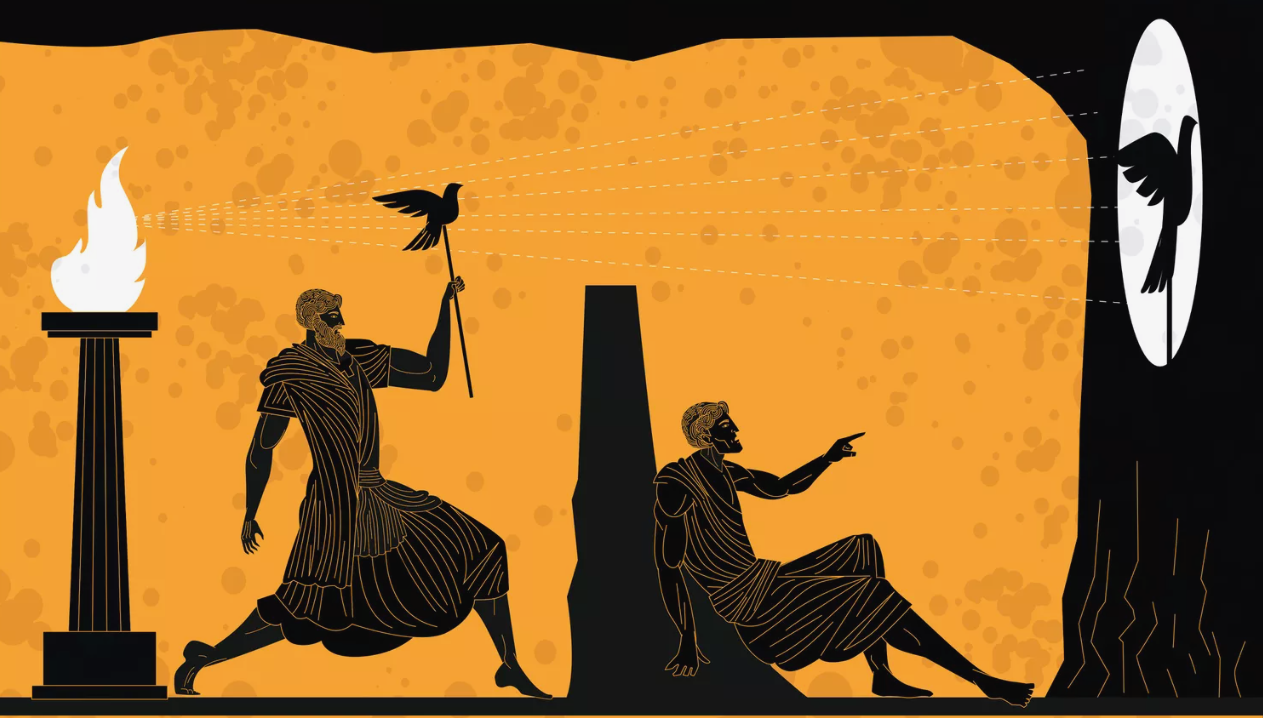
Plato’s Allegory of the Cave is a story that has been passed down through the ages. It is a story that speaks of the human condition and the journey to enlightenment. The story goes like this:

There are people who have been chained in a cave their whole lives. They can only see what is in front of them and they believe that this is all there is to life. One day, one of these people breaks free from their chains and starts to walk around. They see that there is so much more to life than they ever could have imagined. They see the sun, the sky, and the stars. They realize that they have been living in darkness their whole lives and they are finally able to see the truth.

This story is an allegory for the human condition. We are all chained in our own way. We can only see what is in front of us and we believe that this is all there is to life. But if we break free from our chains, we will see that there is so much more to life than we ever could have imagined. We will see the truth and we will be enlightened.

What is Samadhi?

The word “samadhi” comes from the Sanskrit root “sam-a-dha,” which means “to bring together, to concentrate.” In Hinduism and Buddhism, samadhi is a state of deep concentration or absorption in which the meditator becomes one with the object of meditation. In Christian meditation, samadhi is often called the prayer of silence or the prayer of stillness because it is a state of complete stillness of body and mind in which we become completely absorbed in God.

When we enter into samadhi, we let go of all our thoughts and concerns and rest in the presence of God. Just as a river flows into the ocean and becomes one with it, in samadhi we become one with God. In this state of oneness, we experience perfect peace and bliss.

Understanding Samadhi

In Plato’s Allegory of the Cave, Plato describes a group of people who have been imprisoned in a cave since birth. These people are only able to see the shadows of objects that are cast on the wall in front of them. One day, one of the prisoners is released from his chains and forced to walk up a steep path to the outside world. At first, he is blinded by the bright light and can only see vague shapes. But eventually, his eyes adjust and he is able to see the true forms of things: the sun, the moon, and the stars.

The prisoners in this allegory represents individuals who are still bound by their perceptions. They are only able to see what is immediately in front of them and have never experienced anything else. The release from chains represents the moment when someone realizes that there is more to life than what can be seen with physical eyes. The journey up the steep path represents the hard work that must be done in order to transcend perception and achieve samadhi.

In order to understand samadhi, it is important to realize that our perceptions are not reality. Our brains take in information through our senses and then interpret that information based on our past experiences and beliefs. This interpretation is not always accurate; sometimes we see things that are not really there or we fail to see things that are right in front of us.

Samadhi is the transcendence of these perceptions and a realization of the true reality beyond them. It is a state of complete awareness, where we can see things for what they truly are. This does not mean that we will have perfect knowledge or understanding, but it does mean that we will be able to look at life objectively and without bias and without emotional investment that pulls us back into destructive patterns.

Benefits of Achieving Samadhi

There are many benefits of achieving Samadhi, which is a state of complete unity with the divine. In this state, all sense of separation between the individual and the divine disappears and one experiences complete bliss. This state can be achieved through meditation and other spiritual practices.

Some of the benefits of achieving Samadhi include:

1) Increased understanding and wisdom: In this state, individuals have increased clarity about themselves and the world around them. They are able to see things from a higher perspective and gain deeper insights into the nature of reality.

2) Improved mental and physical health: Samadhi has been shown to improve mental and physical health. It helps reduce stress and anxiety, while also boosting immunity and improving overall well-being.

3) Greater peace of mind: Achieving Samadhi brings about a deep sense of peace and tranquility. This can be extremely beneficial for those who are dealing with difficult life circumstances or who are struggling with inner turmoil.

4) Enhanced creativity: The heightened state of consciousness that comes with Samadhi can lead to increased creativity. This can be expressed in various ways, such as through art, music, writing, or other forms of self-expression.

5) Deeper connection to the divine: In Samadhi, individuals feel a deep connection to the source of all creation. This can lead to a sense of oneness with the world around you and a feeling of immense love and compassion for others.

Biblical Support for Samadhi

The Bible speaks of Samadhi in many ways. In the Old Testament, it is referred to as “the secret place of the Most High” (Psalm 91:1) and “the shadow of the Almighty” (Psalm 91:1). In the New Testament, it is called “the rest that remains for the people of God” (Hebrews 4:9) and “a very present help in trouble” (Psalm 46:1).

Samadhi is a state of complete absorption in God. It is a state of complete oneness with God. In Samadhi, we are one with God and God is one with us. We are in perfect harmony with God. This is the highest state that a human can attain.

When we are in Samadhi, we are not thinking about anything else but God. We are completely focused on God. We are in a state of complete bliss. All our worries and concerns disappear. We are at peace with ourselves and with the world around us.

The Bible also speaks of Samadhi in terms of spiritual transformation. In the New Testament, Jesus said: “If anyone would come after me, let him deny himself and take up his cross and follow me” (Matthew 16:24). This is an invitation for us to undergo a transformation—to be filled with God’s Spirit and to be one with Him. As we do this, our minds are transformed, and we begin to experience the peace and joy of Samadhi.

In essence, Samadhi is a state of complete oneness with God. It is a state of perfect harmony and peace that can only be experienced when we are completely focused on God. The Bible speaks of Samadhi as a spiritual transformation that leads us closer to God and into His presence.

– Old Testament Examples

The Hebrew Scriptures are full of examples of individuals who attained samadhi. The most well-known example is that of Moses. While on Mount Sinai, Moses communed with God for forty days and nights. During this time, he experienced an altered state of consciousness and received the Ten Commandments.

Other Old Testament figures who attained samadhi include Elijah (who was carried off into heaven in a whirlwind), Ezekiel (who had a vision of the divine chariot), and Daniel (who survived being thrown into a den of lions). These examples show us that samadhi is not something that is out of reach for the average person; rather, it is something that is available to all who seek it.

The Old Testament also records many stories of people who were healed through prayer and meditation. In 2 Kings 5:14, the prophet Elisha instructs Naaman to “dip seven times in the Jordan River” in order to be cured of his leprosy. Through this simple act of faith, Naaman was healed. Similarly, Jesus healed a paralyzed man by simply saying “Arise and walk” (Matthew 9:6). These examples demonstrate that faith leads to healing.

Finally, the Old Testament is filled with stories of people who experienced visions and revelations. For example, Isaiah had a vision of the Lord seated on a throne (Isaiah 6:1-2). In another instance, Daniel received a vision revealing the fate of various world empires (Daniel 7-12). These examples show us that samadhi can bring profound insight into the spiritual realm.

– New Testament Examples

When we look at the New Testament, we see multiple examples of people entering into a state of samadhi. In the book of Acts, we see Peter and John going up to the temple to pray and they are “lifted up” into a trance-like state (Acts 3:1-4). In another instance, Paul is caught up into the third heaven and hears things that he is not permitted to speak about (2 Corinthians 12:2-4). These examples show us that it is possible for Christians to enter into a deep state of meditation and communion with God.

In the Gospels, Jesus Himself spends time in prayer and communion with His Father. In Luke 6:12, Jesus went out to a mountainside to pray and spent the entire night in prayer. This shows the importance of spending time in prayer and communing with God. In Matthew 14:23, Jesus often went away by Himself to pray. This demonstrates that even Jesus needed time alone with His Father to commune and pray.

These examples from the New Testament show that it is possible for Christians to enter into a state of samadhi. Time spent in prayer and communion with God gives entry into a deep state of meditation where we are one with Him.

Practicing Samadhi in Daily Life

When it comes to practicing samadhi in daily life, there are a few things that Christians need to keep in mind. First and foremost, they need to remember that meditation is not a means to an end in and of itself. Rather, it is a tool that can help them to focus on God and connect with him more deeply. Secondly, Christians should be aware that there is no one “right” way to meditate. Different people will find different techniques helpful – the important thing is simply to find a way that works for you and stick with it. It is important to remember that the goal of meditation is not to achieve some sort of altered state of consciousness. Rather, the purpose is simply to still your mind and focus on God. With these things in mind, here are a few tips for practicing samadhi in daily life:

1. Make time for it: One of the most important things you can do if you want to meditate regularly is to make time for it in your schedule. Set aside at least 10-15 minutes each day where you can sit quietly without distractions and focus on your breath or another chosen object of meditation.

2. Start small: If you’re new to meditation, don’t try to do too much too soon. Start with shorter sessions (5 minutes or less) and gradually work up to longer ones as you get more comfortable with the practice.

3. Find a comfortable  place: It’s important to find a comfortable spot to meditate, whether it’s in your bedroom, living room, or somewhere else. Make sure you have enough space and that the environment is peaceful and free of distractions.

4. Use a guided meditation: If you find it difficult to stay focused on your breath or another object of meditation, try using a guided meditation as an aid. There are many audio recordings available online that can help guide you through the process.

5. Be patient: As with anything else, learning to meditate takes patience and practice. Don’t be discouraged if your mind wanders or if you don’t experience any profound spiritual awakenings right away – just keep at it and eventually the benefits will come.

Benefits of Practicing Samadhi

When Jesus was asked what the greatest commandment was, he said to love the Lord your God with all your heart, soul, and mind (Matthew 22:37). This is the essence of samadhi—union with God. Through Christian meditation and prayer, we open our hearts and minds to God’s love and grace. As we receive His love, our hearts are transformed and we become more like Him. We experience His peace and joy, even in the midst of trials.

Christian meditation is not just a passive experience where we sit quietly and empty our minds. It is an active process of surrendering our thoughts, emotions, and will to God. As we meditate on His Word, we allow Him to speak to us and reveal His truth to us. We also ask for His guidance and wisdom in making decisions. In this way, Christian meditation is a powerful tool for personal transformation as well as for discerning God’s will for our lives.

Conclusion

By understanding the biblical foundation of samadhi, we can better appreciate how Christian meditation is deeply rooted in our faith. Whether it be through silent prayer or repetitive mantras, Christian meditation allows us to draw nearer to God and reconnect with His love for us. The Allegory of the Cave is an insightful story that serves as a metaphor for how we can use self-awareness and meditation to transcend our perception of reality. By recognizing and understanding the limitations of our beliefs, we can access higher levels of consciousness that are not bound by physical laws or subjective viewpoints. Through this process, we will become more enlightened and liberated from our own illusions. With Plato’s teaching as a guide, it is possible to reach Samadhi, the highest level of spiritual enlightenment. This practice not only helps cultivate a personal relationship with Jesus but also serves as an avenue for further spiritual growth and transformation.

The Soul’s Journey to Find its Other Half: A Philosophical Perspective on Soulmate Theory

Have you ever felt an inexplicable connection to someone, as if your souls were meant to be intertwined? The idea of soulmates has fascinated philosophers, poets, and romantics for centuries. But what exactly is a soulmate? And how does the concept relate to our own personal journeys of self-discovery and fulfillment? In this post, I explore the philosophical perspective on soulmate theory and delve into the mysteries of the soul’s journey to find its other half.

Introduction to Soulmate Theory

When it comes to finding our soulmates, there are a lot of theories out there. But what does soulmate theory actually mean?

In its simplest form, soulmate theory suggests that each of us has a “soul mate” or “twin flame” who is the perfect match for us. This person is said to be our perfect complement, and we are destined to be together.

There are many different variations of soulmate theory, but the basic idea is that we are all searching for our other half. Our souls yearn for completion, and we will go through many lifetimes until we find our perfect match.

 Soulmate theory can be traced back to ancient Greece, where Plato believed that each person’s soul was split in two. He believed that we would spend our lives searching for our other half, and when we finally found them, we would be complete.

Other philosophers have similar ideas about soulmates. Aristotle believed that each person had a “perfect friend” who could help them achieve their full potential. Friedrich Nietzsche wrote about the “eternal return of the same,” which suggested that we are constantly cycling through life until we find our true love.

There is no one right or wrong answer when it comes to whether or not soulmate theory is true. However, the idea of a perfect match for each of us is an intriguing and romantic notion. Whether you believe in soulmates or not, the journey to find your own

What is a Soulmate?

A soulmate is someone with whom you have a deep and natural connection. This person understands you better than anyone else and accepts you for who you are, without judgment. Your soulmate brings out the best in you and makes you feel like you are finally home.

When you meet your soulmate, it is like meeting a part of yourself that you never knew was missing. There is an instant recognition and familiarity between you. You feel as though you have known each other forever, even though you may just be meeting for the first time.

Your connection with your soulmate is unlike any other relationship you have ever had. It is intense and all-consuming, yet also calming and comforting. You feel as though this person was made just for you, and they complete you in a way that no one else can.

Philosophical Perspective of Soulmates

The philosophical perspective of soulmates is that they are two halves of a whole. This means that each person has only half of their soul, and the other half is out there somewhere, waiting to be found. The theory goes that when you find your soulmate, it’s like finding the missing piece to your puzzle. You finally feel complete and whole.

There are many different interpretations of the soulmate concept, but the common thread is that soulmates are meant to be together. They have a deep connection that cannot be explained by logic or reason. It’s a spiritual connection that goes beyond the physical world.

The idea of soulmates is a popular one, and there are many stories and films about people finding their true love. But the reality is that not everyone will find their soulmate. Sometimes people go through life without ever meeting their other half.

Types of Soulmates

There are different types of soulmates that we can encounter in our lifetime. Some soulmates come into our lives to teach us lessons, while others are here to help us grow and evolve. There are also twin flame soulmates, who are our perfect match in every way.

The most important thing to remember is that each type of soulmate serves a purpose in our lives. It is up to us to open our hearts and minds to the possibilities of what these relationships can offer us.

1) Life Lesson Soulmates: These types of soulmates come into our lives to teach us valuable lessons. Often times, these relationships challenge us and push us out of our comfort zones. While they may not be easy, they are necessary for helping us grow and learn more about ourselves.

2) Growth Soulmates: These soulmates come into our lives to help us expand and evolve. They help us see the world from a different perspective and often times challenge us to let go of old patterns and beliefs that no longer serve us. These relationships can be very healing and transformational.

3) Twin Flame Soulmates: Twin flame soulmates are our perfect match in every way. We share a deep connection with them that goes beyond the physical realm. They mirror back to us all of our deepest fears and wounds, but also show us our greatest potential. These relationships can be intense and challenging, but also incredibly rewarding.

No matter what type of soulmate we encounter, it is important to remember that each relationship serves a purpose in our life. By embracing these relationships and learning from them, we can grow and evolve in ways that we never thought possible.

Examples of Soulmates in the Bible

In the Bible, there are many examples of soulmates. In the Old Testament, we see Abraham and Sarah as a perfect example of a soulmate relationship. They were deeply in love with each other and had a strong spiritual connection. In the New Testament, we see Mary and Joseph as another example of a soulmate relationship. They were also deeply in love with each other and had a strong spiritual connection.

Other examples of soulmates in the Bible include Ruth and Boaz, Isaac and Rebekah, and David and Jonathan. These couples were deeply connected to each other on an emotional, spiritual, and physical level.

The Journey of the Soul in Search of its Other Half

As the theory goes, when we are born, our soul is whole. It is only through the journey of life that we lose our sense of wholeness and become fragmented. The journey of the soul is to find its other half – the part that will make us feel complete again.

There are many theories about how this journey unfolds, but one thing is certain: the soul does not rest until it finds its missing piece. This can be a lifetime journey or it can happen in an instant – when we finally meet our soulmate.

What happens when we find our soulmate? There is a deep connection between two people who are meant to be together. They feel like they have known each other before and they are comfortable with each other in a way that they are not with anyone else.

This connection goes beyond the physical and into the spiritual realm. When we meet our soulmate, it feels like coming home. We finally feel at peace and complete.

The Significance of Finding One’s Soulmate

When you find your soulmate, it is as if you have found the other half of your soul. This person is your perfect match in every way and you will feel a deep connection to them that is unlike any other. Some theories state that you may have known them in a previous life or they may be a complete stranger, but you will feel like you have known them forever.

Your soulmate will understand you completely and they will be your best friend and lover. You will feel totally comfortable with them and you will be able to be yourself without feeling judged. You will also feel a strong spiritual connection with your soulmate and this can help you to grow and develop spiritually.

The Outcome When Two Souls Find Each Other

When two souls find each other, it is said that they have found their other half. These two souls are then able to live together in harmony and balance. There is a deep connection between these two souls that cannot be denied. They feel as though they have known each other before and they are drawn to each other in a way that cannot be explained.

These two souls will often have similar interests, values, and beliefs. They will also share a strong physical and emotional connection. Their relationship will be one of mutual respect and understanding. They will be able to communicate on a deep level and will support each other through thick and thin. This type of relationship is rare, but when it does occur, it is magical.

Conclusion

In conclusion, the concept of a soul’s journey to find its other half is an age-old philosophical concept that has been explored by many different cultures and belief systems. This idea, while not necessarily tangible or scientific, still carries with it much power and meaning. It speaks to the human desire for connection and understanding in this life, and suggests that perhaps we are all searching for something more than ourselves in our search for happiness. Ultimately, only you can decide what your own individual beliefs on soulmates might be; but whatever path you choose to take on your journey of self-discovery may bring about greater insight into who you truly are as an individual.

Did Sartre Believe in Manifesting? Examining his Beliefs

Do you believe in the power of manifestation? It’s a concept that has gained popularity in recent years, but did you know that even famous philosophers have pondered its validity? Jean-Paul Sartre was one such thinker who grappled with the idea. In this blog post, we’ll delve into his beliefs and explore whether or not he truly believed in manifesting. Get ready for an intriguing journey through philosophy and self-reflection as we examine Sartre’s perspective on this controversial topic.

Introduction to Sartre and His Philosophy

Sartre is one of the most famous philosophers of the 20th century. He was a French existentialist who believed that humans are responsible for their own choices and actions. He also believed that we create our own meaning in life and that there is no inherent meaning in the universe. Sartre’s philosophy has influenced many people, including some who have used it to justify manifesting.

So, did Sartre believe in manifesting? It’s difficult to say for sure, as he didn’t explicitly discuss it in his writings. However, given his beliefs about human responsibility and creating our own meaning in life, it’s possible that he would have approved of the practice. Manifesting is all about taking control of your life and creating your own reality, which aligns with Sartre’s philosophy.

Overview of Manifesting

Manifesting is the practice of using the power of our thoughts, feelings, and intentions to bring forth desired outcomes. It is based on the idea that the universe is made up of energy, and we can manipulate this energy with our thoughts and actions. By deliberately focusing on what we want to create in our lives, we can manifest it into existence. This could be anything from material wealth to physical well-being, or even finding a romantic partner. The key is to focus on what you want with an unwavering intention—and then take inspired action towards making it happen.

Did Sartre Believe in Manifesting?

Sartre believed in the power of the mind. He believed that our thoughts and beliefs shape our reality. For example, if we believe that we are not good enough, we will create a reality in which we are not good enough. However, if we believe that we are powerful and capable, we will create a reality in which we are powerful and capable. So, while Sartre may not have specifically write about manifesting, his beliefs align with the principles of manifesting.

How Did He View Manifestation?

Sartre’s view of manifestation is a bit different from the traditional understanding of the term, however. For Sartre, manifestation is not just about bringing something into being, but also about revealing something that was already there. In other words, manifestation is not just about creating something new, but also about making something that was previously hidden explicit and present.

This understanding of manifestation is based on Sartre’s belief that existence precedes essence. This means that we exist first and only later do we develop any sort of identity or characteristics (essence). This is in contrast to the traditional view which holds that essence comes first and existence follows from it. For Sartre, then, everything starts with existence and it is only through our conscious choices and actions that we reveal our essence to ourselves and to others.

Manifestation, for Sartre, is thus a process of revealing rather than creating. It is about making explicit what was already there implicitly. It is important to note that this does not mean that everything is predetermined or fated. Rather, it simply means that our choices are always significant because they reveal who we are. In this way, Sartre believed that we are constantly manifesting our true selves through our choices and actions.

Examples of Manifestations According to Sartre

According to Sartre, there are three primary types of manifesting:

1. Acting in the world to make something happen

2. Allowing something to happen by not acting

3. Imagining something happening

Sartre believed that all three manifestations were equally valid and could be used to create change in the world. He believed that the power of manifestation comes from within each individual, and that it is up to each person to decide how they will use their power.

For example, a person may choose to act in the world to make a difference by starting a new business or volunteering for a cause they believe in. Alternatively, someone may choose to allow something to happen by not acting, such as when they meditate or practice yoga to relax and release negative energy. A person may imagine something happening in order to bring it into reality, such as visualizing themselves achieving a goal or winning a competition.

No matter which type of manifestation is used, Sartre believed that it is the intention behind the action that matters most. He believed that individuals have the power to create their own reality through their thoughts and actions, and that we are all responsible for our own lives.

The Role of Free Will in Manifestation

As far as manifesting goes, Sartre believed that we create our own reality through our actions and thoughts. He didn’t necessarily believe in the law of attraction, but he did believe that our free will is what shapes our lives.

Sartre believed that we are responsible for our own actions and thoughts, and that these shape our reality. He didn’t believe in predestination or fate, but instead believed that we have the power to create our own destiny through our choices.

While Sartre may not have specifically believed in the law of attraction, his beliefs about free will and responsibility align with the principles of manifestation. Manifestation relies on the belief that we can create our own reality through our thoughts and actions. If we want to manifested something into existence, we need to put forth the effort and intention to make it happen. Just as Sartre believed we are responsible for shaping our own lives, so too do we need to take responsibility for manifestation. We can not just sit back and expect things to happen without putting in the work; manifestation requires effort on our part.

Conclusion

Sartre’s philosophy on manifesting was complex and multifaceted. On one hand, he argued that humans should strive to be open to the possibility of change but at the same time, he asserted that our actions were predetermined. Ultimately, while there may not have been a clear answer as to whether or not Sartre truly believed in manifesting, his emphasis on free will implies that it is possible for us to take control of our lives and create meaningful changes.

From Selflessness to Self-Absorption: Similarities between Caregivers and Narcissists

Have you ever stopped to consider the striking similarities between caregivers and narcissists? It may seem counterintuitive at first, but when I delve deeper into the philosophy behind these two seemingly opposite roles, some surprising parallels emerge. In this blog post, I explore how both caregivers and narcissists share a common motivation – a deep desire to be needed and validated by others – and what this means for our understanding of human relationships. I also delve into what happens when selflessness becomes an unhealthy obsession with oneself by exploring how philosopher Edmund Husserl’s ideas shed light on the complex intersection between caregiving and narcissism. For Husserl, these two seemingly opposing concepts can coexist in unexpected ways.

Caregivers and Narcissists

Caregivers and narcissists share several key characteristics, which can make it difficult to distinguish between the two. Both groups tend to be highly self-involved, viewing the world primarily through their own lens. They also tend to be highly sensitive to criticism and react strongly to any perceived threat to their ego. Additionally, both caregivers and narcissists tend to be manipulative and control-freaks, always seeking to have things their own way.

The main difference between caregivers and narcissists is that caregivers are motivated by a genuine desire to help others, while narcissists are motivated primarily by a need for admiration and attention. caregivers are often selfless people who are willing to put the needs of others above their own. Narcissists, on the other hand, often exploit others for their own gain and typically lack empathy.

Comparing the Two Groups

While both caregivers and narcissists are self-centered, manipulative, and often put their own needs above others, there are also key differences between the two groups.

Caregivers generally have a more altruistic motive for their behavior. They genuinely want to help others and make a difference in their lives. Narcissists, on the other hand, often use others as objects to gratify their own needs.

Another key difference is that caregivers typically have a more realistic view of themselves. They are aware of their own limitations and shortcomings. Narcissists, on the other hand, tend to have an inflated sense of self-importance and believe they are perfect in every way.

Caregivers tend to be more emotionally stable and better able to handle stress than their counterparts. Also, caregivers typically form strong bonds with the people they care for while narcissists have difficulty maintaining close relationships.

The Role of Power Dynamics in Caregiving and Narcissism

Caregivers and narcissists both crave power and control, they both need to be the center of attention, and they both have a deep need for admiration. Power dynamics play a big role in how caregivers and narcissists interact with others. Both groups tend to use their power to control and manipulate those around them. Caregivers do this by using their knowledge and experience to control the situation, while narcissists use their charm and charisma to get what they want.

Another similarity between caregivers and narcissists is that they both tend to put their own needs above those of others. Caregivers will do this out of necessity in their personal relationships by putting the needs of their patients first. Narcissists will their own needs above those of others because they view their needs as more important than anyone else’s.

Finally, both caregivers and narcissists tend to be very self-centered. They are both focused on themselves and their own needs so they have difficulty being vulnerable and authentically connecting with others. This challenges their abilities to form emotionally deep relationships so relationships tend to be one sided and hierarchical in nature.

Ultimately, the key difference between caregivers and narcissists is their motives. While narcissists tend to focus on their own needs and desires, caregivers are motivated by a desire to help and support others. While narcissism is a clear dysfunctional state settled in self-absorption, the delineations in motive can be murky for caregivers. Selflessness or self-absorption can drive caregivers, and the latter is what mirrors narcissism.

Husserl’s Phenomenology and Its Relevance for Caregiving and Narcissism

For Husserl, all experience is conscious experience. This means that when we are in a state of narcissism, we are necessarily aware of our own importance and our own needs. Similarly, when we are caring for someone else, we are aware of their needs and their importance. In both cases, then, our experience is shaped by our awareness of another person.

This shared awareness is what Husserl calls empathy. Empathy is not simply sympathy or pity; it is a way of apprehending another person’s inner life from their perspective. When we empathize with someone else, we try to understand their experiences and their point of view.

Empathy is essential for caregiving because it allows us to see the world from the perspective of the person we are  caring for. Without empathy, caregiving can be superficial and ineffective. Similarly, a lack of empathy can lead to narcissistic traits because it prevents one from seeing beyond one’s own point of view.

The Intersection between Selflessness and Self-Absorption

Edmund Husserl was one of the first philosophers to articulate the idea that there is an intersection between selflessness and self-absorption. According to Husserl, this intersection occurs when someone is so focused on their own needs and desires that they become oblivious to the needs of others. This can lead to a number of negative outcomes, including narcissism, selfishness, and a lack of empathy.

While some may see self-absorption as a purely negative trait, Husserl argued that it can also be a positive force if channeled correctly. He believed that by understanding and acknowledging our own needs and desires, we can be better equipped to understand and empathize with the needs of others. In other words, self-awareness can be a powerful tool for caregiving.

How Selflessness Leads to Caregiving: Exploring Husserl’s Ideas on the Nature of Morality

Husserl believed that selflessness was the key to caregiving. By giving of oneself without expecting anything in return, one can create a space for others in which they can flourish. This selfless act of caregiving is the foundation of morality, and it is only through caregiving that we can create a meaningful and ethical life.

Husserl argues that caregiving is not just an act of compassion, but also a moral duty. When one cares for others, both parties benefit. Through this act of selflessness, one can create meaningful relationships and foster a sense of community. This strengthens the bonds between people and helps to promote societal cohesion. Furthermore, by caring for others, we are able to understand our own values better, allowing us to become better individuals.

In addition, selflessness can lead to greater understanding and respect for others. By giving of oneself without expecting anything in return, we are able to see the needs and wants of those around us in a more profound way. This leads to greater empathy, which is essential for building strong relationships with other people. Furthermore, when we give without expecting anything back, we show our commitment to those around us and demonstrate that we value them as people.

Self-reflection is crucial when it comes to caregiving. Caregivers must take time to reflect on their own values and make sure that they align with their actions towards others. If their values do not match up with how they treat others then there is no true morality present in their actions.

Ultimately, Husserl’s ideas on the nature of morality emphasize the importance of selflessness when it comes to caregiving. Caregivers must give of themselves without expecting anything in return to work from a selfless motivation. When they do, they are to create meaningful relationships and foster a sense of community around them. Selflessness is an essential part of creating meaningful and ethical relationships, but when caregiving comes from a state of self-absorption, narcissistic traits ensue.

How Self-Absorption Leads to Narcissism: Exploring Husserl’s

In Husserl’s philosophy, self-absorption is the process of turning one’s attention inward, away from the external world. This can be a positive or negative experience, depending on the individual. For some, it may lead to a deeper understanding of oneself and the world around them. Others may become so focused on their own thoughts and feelings that they become cut off from reality.

The difference between self-absorption and narcissism is a thin one. On the one hand, self-absorption is a necessary part of the ego’s development. The ego must first turn inward in order to develop a sense of self. Without this initial period of self-absorption, the ego would never develop at all. Narcissism, on the other hand, is a pathological state in which the ego becomes excessively focused on itself to the exclusion of all else. Self-absorption is simply a matter of being too wrapped up in oneself; it is possible to snap out of it and become aware of the world again. Narcissism is a more permanent state in which one’s perception of reality becomes distorted.

The narcissist is totally absorbed in him or herself and has no room for anything else in their lives. In essence, narcissism is a more extreme and deviant form of self-absorption. Individuals who are narcissistic are obsessed with themselves and their own needs and desires. They have little regard for others and often take advantage of them.

Narcissists are often described as being arrogant, manipulative, and self-centered. He believed that this could lead to a form of egotism in which someone becomes overly focused on themselves and their own thoughts. This type of thinking can then lead to narcissism, as people become more and more preoccupied with themselves.

Husserl believed that it is possible to overcome them through philosophical reflection. By turning one’s attention inward and critically examining one’s own thoughts and experiences, he believed, one can learn to see past personal biases and come to a more objective understanding of the world.

Although caregivers and narcissists may appear to be polar opposites, they can often have some surprising similarities. Caregivers are known for their selflessness and sacrifice while narcissists tend to focus solely on themselves. However, in the realm of self-absorption, both of these groups rely heavily on the approval or validation of those around them in order to feel fulfilled. This need for external approval is a common trait amongst many people and it reveals an important truth about human nature – that we all crave connection with one another. It is important for caregivers to be mindful when it comes to one’s thoughts and emotions in order to ensure one is not crossing into narcissistic territory. As long as caregivers practice self-awareness, humility, and empathy for others, they will stay on the right side of this delicate boundary line.

Navigating the Depths of Crippling Depression and Anxiety through Stoicism

Depression and anxiety are two of the most prevalent mental health disorders affecting millions of people worldwide. These conditions can be debilitating, making it challenging to carry out even simple daily tasks. However, instead of letting these feelings overwhelm us, individuals can approach them with a philosophical mindset that empowers them to navigate through this difficult terrain. The ancient philosophy of Stoicism offers practical tools for navigating difficult emotions and finding meaning in everyday life. In this guide, I explore how Stoic principles can help individuals approach depression from a rational perspective, providing actionable steps to move forward with purpose and resilience.

Crippling Depression and Anxiety

Crippling depression and anxiety can feel like being stuck at the bottom of a deep, dark hole with no way out. The weight of the world feels like it’s crushing down on you and every day is a struggle just to keep going. If you’re struggling with crippling depression and anxiety, know that you’re not alone.

It’s estimated that 1 in 5 adults in the United States live with some form of mental illness, and depression and anxiety are two of the most common mental health disorders. Depression is characterized by persistent feelings of sadness, hopelessness, worthlessness, and emptiness. Anxiety is characterized by persistent feelings of worry, stress, and fear. Both disorders can have a debilitating effect on one’s life. They can interfere with one’s ability to work, study, eat, sleep, and enjoy activities one used to love.

Causes and Symptoms of Depressive Disorders

Depressive disorders are characterized by a persistent feeling of sadness and loss of interest in activities that formerly gave pleasure. Other symptoms may include changes in appetite, weight, sleep patterns, and energy level; decreased ability to concentrate; feelings of guilt or worthlessness; and thoughts of death or suicide. These symptoms are most often caused by life events or medical conditions, more specifically, depression emergence from an imbalance or absence of meaning in life.

There are many different types of depressive disorders, each with its own symptoms. Major depressive disorder (also called major depression) is characterized by a combination of symptoms that lasts for at least two weeks and interferes with daily life. Dysthymic disorder (also called dysthymia) is a less severe form of depression that lasts for at least two years. Some people with dysthymia may also experience episodes of major depression during their lifetimes. Bipolar disorder (also called manic-depressive disorder) is characterized by periods of extreme elation or mania alternating with periods of deep depression.

Philosophical Perspectives on Mental Health

The philosophical perspective on mental health is that it is a state of well-being in which an individual realizes his or her own abilities, can cope with the normal stresses of life, can work productively and fruitfully, and is able to make a contribution to his or her community. Mental health is not merely the absence of mental illness. It is a positive concept that emphasizes the importance of emotional well-being.

The philosophical approach to mental health emphasizes the role of reason and critical thinking in promoting mental well-being. Reason is seen as the key to solving problems and overcoming obstacles. This approach also acknowledges the importance of emotions but argues that they should be subordinated to reason. The goal is to achieve a balance between reason and emotion, so that one can lead a productive and fulfilling life.

This philosophical perspective on mental health has its roots in ancient Greece and Rome. The Stoic philosophers believed that humans could control their emotions through reason, and this was seen as the key to achieving mental well-being. The Stoics believed that if people allowed their emotions to get out of control, they would become slaves to them and would be unable to lead lives that were rational and fulfilling.

Introduction to Stoicism

Stoicism is a school of thought that was founded in Athens by Zeno of Citium in the early 3rd century BC. The Stoics were so named because they occupied the Painted Porch (Stoa Poikile) in the Agora, which was decorated with paintings of famous athletes. The Stoics believed that the best way to live was in agreement with Nature, or what they saw as God. They believed that this meant living in accordance with virtue, and that the only things worth pursuing were those which helped obtain virtue and avoid vice.

The Stoics believed in using reason and logic to make decisions, and they thought emotions interfered with this process. Therefore, they believed it was important to train oneself to be emotionally resilient and not allow oneself to be controlled by emotions. The goal was to achieve ataraxia, or a state of being free from disturbance or anxiety. The Stoics also believed in accepting what is unfavorable and trying to take any helpful aspects of it, as well as making use of one’s talents and abilities to the best of their ability.

While Stoicism isn’t as popular now as it once was, its teachings can still be useful for dealing with depression. Depression is often characterized by negative thinking patterns, rumination, and feeling out of control. The Stoic approach of using reason and logic can help counter these thoughts, and training oneself to be emotionally resilient can help deal with the negative emotions associated with depression and anxiety.

The Problem of Emotions & Depression

The Stoics believed that the key to a happy and fulfilling life was living in harmony with Nature. This meant accepting what is unfavorable and trying to take any helpful aspects of it. The goal was to be reasonable and virtuous. The Stoics also believed in using reason and logic to deal with difficult situations. This means taking a step back, looking at the situation objectively, and figuring out the best way to deal with it.

Practical Solutions: Applying Stoic Principles in Everyday Life

In order to start living a Stoic life, it is important to first understand the Stoic principles. Some of the main principles are:

1) That which is within our control should be our only focus and concern. This includes our thoughts, emotions, and actions.

2) We should live in accordance with Nature (i.e. reason and virtue).

3) We should strive for self-improvement.

4) We should accept what is unfavorable and work to take advantage of it.

After understanding these principles, we can begin to apply them in our everyday lives. Here are some practical ways to do so:

1) Recognize What Is Within Your Control: The first step is to identify what things are within your control and what things are not. You can only control your own thoughts, emotions, and actions – not the thoughts, emotions, or actions of others. Once you have identified what is within your control, focus your attention on those things and let go of worrying about the things that are out of your control.

2) Live in Accordance with Nature: One way to do this is by aligning your actions with reason and virtue. Reason represents our ability to think clearly and make logical decisions; virtue represents our character strengths such as courage, justice, temperance, etc. When we live in accordance with Nature (reason and virtue), we are able to achieve inner peace and tranquility despite whatever is happening around us.

3) Strive for Self-Improvement: We should always be striving to become better versions of ourselves, both internally and externally. This could include learning new skills, taking on difficult tasks, or simply being conscious of our thoughts and actions.

4) Accept Unfavorable Events: Rather than resisting unfavorable events, we should strive to accept them and look for ways to make the best out of them. This can help us develop resilience and strength in the face of adversity.

Building Resilience and Stress Management

Building resilience and stress management are two key components of Stoicism that can help people deal with depression. Stoics believed that the ability to withstand hardship and adversity was essential for a happy and fulfilling life. They developed a number of techniques and practices to build resilience and manage stress, which are still relevant today.

One key practice is negative visualization, which involves picturing oneself in worst-case scenarios in order to be prepared for them if they do occur. This helps to build psychological resilience by increasing one’s sense of control over their destiny. Other important practices include focusing on what is within one’s control, taking action towards one’s goals, and living in accordance with nature.

Above all, the Stoics believed that the best way to deal with difficult emotions was to use logic. They believed that if one could understand the emotions and see them for what they were, one would be less likely to be controlled by them. In essence, they believed in using reason to make decisions, rather than letting emotions guide the way.

There are a few steps people can take to overcome depression using logic, as inspired by Stoicism:

1. Understand your emotions. What are they trying to tell you? What is their purpose? Is it an old emotion or a one appropriate for the situation? Are you feeling a certain way due to the actual situation or are you being triggered by past patterns? When you can see your emotions for what they are, it will be easier to control them rather than being controlled by them.

2. Make decisions based on reason, not emotion. This doesn’t mean that you should never listen to your heart or follow your gut instincts – but those shouldn’t be the only factors guiding your decisions. Weigh out pros and cons logically, and don’t let depression cloud your judgement.

3. Don’t try to fight your emotions head-on. Accepting them and understanding them is a better strategy than resisting them. If you try to push away negative emotions, they will only come back stronger because they will be controlling you rather than you controlling them through understanding. If you can learn to understand them (old or new?) and work with them or in spite of them to change your circumstances, they will eventually lessen when triggers are presented, putting you in charge of what you do rather than simply reacting to push them away.

In conclusion, Stoicism offers a rational approach to dealing with depression that allows us to explore the root of our suffering and actively work towards a healthier mental state. With this philosophy in mind, we can begin to develop strategies for coping with our depression, focusing on the things over which we do have control and learning how to better manage the ones that don’t. By understanding our triggers and developing healthy habits, we can start to feel more hopeful about our ability to cope with difficult emotions. Additionally, understanding that we have the power to change our perspective on situations and make conscious choices towards cultivating joy in life can be incredibly empowering.

From Despair to Hope: Healing Trauma Wounds in a Journey Through Existential Angst

It is only when we have faced the absolute worst that life has to offer that we can begin to appreciate the good moments. This was the lesson that Danish philosopher Soren Kierkegaard learned after enduring a series of tragic events in his life. Kierkegaard came to see these experiences not as something to be overcome, but as something to be transformed.

In 1838, Kierkegaard’s mother dies unexpectedly. This event is followed by the death of his father just two years later. Kierkegaard is left with a large inheritance, but instead of using it to live a comfortable life, he donates most of it to charity.

Kierkegaard then turns his attention to his love life. He becomes engaged to Regine Olsen, but breaks off the engagement just months before the wedding. Kierkegaard does this not because he doesn’t love her, but because he feels that marriage would compromise his freedom and ability to pursue his philosophical work.

These events might have broken a lesser man, but Kierkegaard used them as fuel for his writing. In works like “The Sickness Unto Death” and “Either/Or”, Kierkegaard explores the existential angst that comes from facing life’s sorrows head-on. For Kierkegaard, it is only through accepting the darkness within us that we can find true meaning in life.

Introduction to Existential Angst and Kierkegaard’s Works

Existential angst is a feeling of dread, anxiety, or terror that may occur in response to an awareness of the human condition. It is often characterized by a sense of isolation, powerlessness, and meaninglessness. Kierkegaard, a Danish philosopher who lived in the 19th century, is considered one of the fathers of existentialism. His works explore many of the themes associated with existential angst, such as death, freedom, and choice.

Exploring the Depths of Despair in “The Sickness Unto Death”

In his work “The Sickness Unto Death”, Kierkegaard delves deep into the despair that plagues humanity. He examines the various ways in which we can fall into despair, and how this despair can ultimately lead to our downfall. Kierkegaard offers a way out of this despair, however, through faith in God. By recognizing our need for God, and surrendering ourselves to Him, we can find hope and meaning in our lives once again.

The Paradox of Choice in “Either/Or”

The paradox of choice is a central theme in Kierkegaard’s “Either/Or”. The book is structured around the dichotomy of the aesthetic and the ethical life, with the main character, A, living an aesthetic life focused on pleasure and sensuousness, while Judge William lives an ethical life focused on duty and service to others. A confronts the paradox of choice when he must decide whether to stay with his current lover or marry his fiancée. He realizes that either choice will lead to a different life, and that he can’t have both. This leads him into a deep existential angst, as he questions the meaning of life and his own identity. Ultimately, A decides to marry his fiancée and live an ethical life, but the paradox of choice still haunts him.

Finding Hope Through Suffering and Despair

When we are faced with suffering and despair, it can be difficult to find hope. However, Kierkegaard believes that it is through suffering and despair that we can find our way to hope. He argues that when we suffer, we are forced to confront our own mortality and the fact that our lives are ultimately finite. This can be a frightening prospect, but it is also an opportunity for us to realize the importance of living in the present moment and making the most of our lives. Kierkegaard believed that by facing up to the difficult truths about life, we can find a deeper sense of hope and meaning. In his view, despair is not something to be avoided at all costs but rather an essential part of the human experience.

Trauma, for Kierkegaard, is a wound to the soul that can never be fully healed. It is an event that interrupts our lives and shatters our world view. In the aftermath of trauma, we are left with a feeling of profound emptiness and despair. We may try to numb our pain with drugs or alcohol, or engage in risky behaviors in an attempt to escape our suffering. But eventually we must face our trauma head-on if we want to find healing and meaning in our lives again.

Kierkegaard believed that the only way to heal from trauma is to confront it directly. This means facing our fears, accepting our pain, and learning to live with our scars. It is a difficult and often painful journey, but one that can ultimately lead to a more fulfilling and meaningful life.

Applying Kierkegaard’s Ideas to Everyday Life

Kierkegaard’s ideas can be applied to many different aspects of life in order to help individuals find hope and meaning. For example, his idea of the “leap of faith” can be applied when making major life decisions. This means that instead of basing decisions on logic and reason alone, one must also listen to their heart and intuition. Trusting one’s gut feelings can lead to a more fulfilling life experiences, even if the outcome is not initially clear.

Another way Kierkegaard’s ideas can be applied to everyday life is by living in the present moment. This does not mean forgetting about the past or future, but rather being fully engaged in the here and now. Enjoying simple pleasures, spending time with loved ones, and savoring life’s moments can help alleviate existential angst and create a more joyful existence.

Finally, Kierkegaard’s thoughts on death can also be helpful in facing the end of life. Instead of seeing death as an ending, it can be viewed as a new beginning. This perspective can make it easier to come to terms with one’s own mortality and appreciate the time that is given during life.

Conclusion

Through his writings, Kierkegaard has provided us with an insightful exploration of the journey from despair to hope. In examining our relationship with existence and the world around us, we can recognize the various forms of existential angst that arise within us and learn how to confront them. By accepting our own finite nature, embracing uncertainty, and cultivating a healthy perspective on life’s difficulties, we can begin to move toward greater meaning and joy in life. As Kierkegaard so eloquently put it: “Life is not a problem to be solved but a reality to be experienced.”

Lacanian Psychotherapy: A Transformative Journey to Overcoming Trauma

Trauma can be a heavy burden to carry, affecting our physical, emotional, and mental well-being. Trauma can fracture our identities and lead to feelings of alienation or disorientation. It may leave one feeling helpless and stuck with no way out of the painful memories that haunt us. However, with Lacanian psychotherapy, one can embark on a transformative journey towards overcoming trauma. This alternative approach to traditional talk therapy combines insights from Freudian psychology and French philosopher Jacques Lacan’s theory of language and the unconscious mind.

Introduction to Lacan and His Theory of Trauma

Lacan’s theory of trauma has been influential in both psychoanalysis and literary criticism. It has been used to explain the characters in many novels and plays who seem to be disconnected from themselves and from reality. Lacan’s theory can also clarify why some people who have experienced trauma may have difficulty functioning in society or developing healthy relationships.

Lacan’s theory of trauma is centered around the idea of the “split self.” The split self is a result of the individual’s experience of trauma, which causes a break in the individual’s sense of self. This break can be seen as a physical or psychological injury that disrupts the individual’s ability to integrate their past experiences into their present sense of self. The individual may feel disconnected from their body and from their own thoughts and feelings. This can lead to a feeling of isolation and despair.

Lacan believed that the split self was a necessary defense mechanism that allowed the individual to cope with their trauma. However, he also believed that this defense mechanism could eventually become harmful if it was not resolved. The individual may become unable to function in society or may develop mental health problems such as anxiety or depression.

Exploring the Split Self and Its Role in Trauma

Lacan’s concept of the split self is a way to understand how the experience of trauma can lead to a sense of fragmentation and division within the self. The split self is a result of individuals’ attempts to defend themselves against the overwhelming experiences of trauma. This defense mechanism leads to a splitting of the self into two parts: the part that experiences the trauma and the part that tries to protect the individual from further harm.

The part of the self that experiences trauma is often referred to as the “true self.” This is because it is the part of the individual that is most in touch with their authentic emotions and experiences. The true self is often buried under layers of defense mechanisms, such as repression, denial, and dissociation. However, when these defenses are no longer able to protect the individual from experiencing pain, the true self comes out and expresses itself.

The other part of the split self is known as the “false self.” This is because it is a persona that the individual creates in order to protect him or herself from further hurt. The false self is often an idealized version of oneself that presents a happy façade to others. It may also be a more tough and aggressive persona that allows the individual to defend themselves physically or emotionally. The split between these two parts of the self can lead to a sense of fragmentation and isolation. The individual may feel like they are two separate people, each living in their own world.

Lacan’s concept of trauma can be best understood in relation to his theory of psychoanalysis. The split self is a result of the subject’s inability to reconcile the conflicting demands of the ego and the id. This conflict results in a division of the self into two separate parts: the ego-ideal and the ego-id. The ego-ideal is the part of the self that wants to meet the demands of the ego, while the ego-id is the part of the self that wants to meet the demands of the id. The conflict between these two parts of the self can lead to feelings of trauma and anxiety.

The Role of Language in Understanding Trauma

In order to understand trauma, it is also important to understand the role of language. Language is what allows one to communicate one’s experiences and thoughts to others. It is also what allows someone to make sense of his ore her experiences and understand the world. Without language, one would be unable to understand or process one’s experiences, and one would be unable to share those understandings with others.

Trauma is an experience that is so overwhelming that it shatters one’s ability to use language to make sense of it. This can happen because the trauma is too much to bear emotionally, or because one is physically unable to speak. When this happens, individuals are left feeling fragmented and disconnected from themselves and the world around them.

Lacan believed that trauma occurs when an individual is faced with an experience that cannot be symbolized by language. This experience shatters one’s ability to make sense of it and leaves one feeling lost and disconnected. This is why some people who have experienced traumatic events may never be able to talk about them. They may seem “stuck” in their trauma, re-living it repeatedly in their minds.

Power Dynamics of Trauma

Trauma is not simply one single event that has a lasting impact on an individual. Trauma is a process that unfolds over time, with different individuals experiencing different aspects of it. Trauma is a power dynamic between the individual and the traumatic event. This power dynamic between the individual and trauma can have lasting effects on an individual’s mental health. It can lead to problems with anxiety, depression, and PTSD. It can also lead to substance abuse and other forms of self-harm. Understanding this power dynamic is important for helping people who have experienced trauma to heal.

The ego is the part of the self that is in contact with reality, while the id is the part of the self that is cut off from reality. The ego tries to protect itself from the id by creating a barrier, or what Lacan calls “the imaginary. However, this barrier is not always effective. When faced with a traumatic event, the ego may be overwhelmed, and the id may take over. This can lead to dissociation, or a split between the ego and the id. The ego then experiences trauma as an overwhelming force that cannot be controlled or understood.

Lacanian Psychotherapy

Lacan’s psychoanalytic theory is built on the concept of the mirror stage. The mirror stage occurs during infancy, when the child first sees itself in a mirror and recognizes that it is a separate entity from others. This recognition leads to a sense of alienation and anxiety, which can only be alleviated through the formation of an ideal ego. The ideal ego is an imaginary version of the self that is perfect and unified. It serves as a way for the individual to cope with the anxiety produced by the realization of their own individuality.

Lacanian psychotherapy is a type of therapy that uses Lacan’s theories to help people overcome psychological problems. The therapist works to help the patient develop a more realistic view of themselves and to resolve any internal conflicts that may be causing distress. The goal of Lacanian psychotherapy is to help patients achieve a greater sense of self-awareness and self-acceptance.

Lacanian therapy has been shown to be effective in treating a variety of psychological disorders, including depression, anxiety, eating disorders, and OCD. It has also been used to help people who have experienced trauma recover from their experiences.

The Language of Unconscious Experience

Lacan’s theories center around the idea that there is a fundamental gap between words and things, between our conscious experiences and the unconscious reality that shapes them. This gap is what gives rise to anxiety, because it is impossible to ever know for certain what lies on the other side. In order to make sense of their lives, individuals rely on symbols and signs that point towards an underlying meaning that they can never fully grasp.

 Symbolic interactionism, a theory developed by George Herbert Mead, provides a useful framework for understanding how Lacanian ideas can be applied to psychotherapy. According to his theory, human beings engage in constant communication with others in order to create shared meaning. Language is the primary tool people use for this purpose, but it is always incomplete and imperfect. They must always fill in the gaps left by words with their own interpretations.

This process of interpretation is especially important when it comes to understanding one’s own mental states and experiences. The mind is constantly producing thoughts and feelings that are outside of conscious awareness. In order to understand these states, one must interpret the symbols and signs that are presented. This is where Lacanian psychoanalysis can be helpful.

Lacanian therapists aim to help their patients become aware of the underlying meanings of their symptoms and experiences. Through a process of free association and interpretation, they help patients uncover hidden truths about themselves that have been buried in their unconscious mind.

Exploring Repressed Memories and Emotions within a Lacanian Framework

Lacanian psychoanalysis posits that repressed memories and emotions are actually a result of one’s own subconscious desires. In Lacanian psychoanalysis, the human psyche is divided into three main parts: the ego, the superego, and the id. The id is the part of the psyche that contains one’s most basic and primal urges, while the superego is the part that regulates behavior according to societal norms. The ego is what mediates between these two extremes, and it is through this mediation that one can function in everyday life.

According to Lacan, there is a fourth part of the psyche known as the “real” which lies outside of our conscious awareness. This is where repressed memories and emotions reside. These memories and emotions are often too painful for to confront directly, so they remain buried in the subconscious. However, they can still have a powerful influence on one’s life, affecting the way one thinks, feels, and behaves.

Techniques Used in Lacanian Therapy

Lacanian psychoanalysis offers a way to resolve these issues through therapeutic techniques such as free association and interpretation of dreams. It is a unique approach to mental health that emphasizes the importance of language and symbols in one’s life. Practitioners works to help their clients overcome traumatic experiences by deciphering the meaning of their symptoms. This type of therapy often uses different techniques such as free association and interpretation of dreams. Lacanian therapy can be an effective treatment for patients who have experienced trauma as it can help individuals make sense of their symptoms and learn to cope with them in a healthy way.

Conclusion

This split self can lead to confusion and difficulty in establishing identity, but through exploration and therapy, individuals can reconcile their inner selves and find peace within themselves. Understanding the nuances of this complex concept requires further study; however, exploring Lacan’s theories provides unique insight into the psychological effects that trauma has on human beings. Lacanian Psychotherapy can be a powerful tool for those working to overcome the effects of trauma. Its focus on subjectivity and its emphasis on understanding language as an expression of self-reflection gives people insight into their interior world, allowing them to address the underlying issues that cause feelings of distress. With careful exploration, practitioners can guide their clients through a transformative journey, leading to the possibility of true healing.

Socrates’ Wisdom Applied to Modern Times: Investigating the Relationship Between Social Media and Depression

What would Socrates say about social media and its impact on our mental health? In today’s digital age, it’s easy to get lost in the world of likes, followers, and notifications. But what is the true cost of constantly scrolling through a barrage of information? Are we really connecting with others or are we simply hiding behind screens? Here, I discuss the relationship between social media and depression by applying ancient wisdom from none other than Socrates himself.

Socrates was an ancient Greek philosopher who is considered to be one of the most influential thinkers in Western philosophy. He is best known for his doctrine of Forms, which states that there is a realm of abstract objects that exist outside of the physical world. Socrates also believed that wisdom comes from understanding these Forms.

Socrates Forms were a series of dialogues between Socrates and various other people that were written down by Plato. In these dialogues, Socrates would ask questions to try and get at the truth of things. The Forms were thought to be eternal, perfect, and unchanging ideas that were the basis for all other things in the world.

In modern times, we can apply Socrates’ wisdom to our understanding of the relationship between social media and depression. Depression is a serious mental health condition that can have a negative impact on an individual’s ability to function in everyday life. Social media has been identified as a potential risk factor for developing depression.

There are several ways in which social media may contribute to depression. First, social media can create a sense of comparison and envy. When we see other people’s highlight reels on social media, we may start to compare our own lives to theirs and feel like we are falling short. This can lead to feelings of inadequacy and worthlessness.

Second, social media can be a source of cyberbullying and negativity. When we are exposed to negative comments and trolling, it can take a toll on our mental health. Third, social media can contribute to feelings of isolation and loneliness. When we spend more time interacting with our online friends than our real-life friends, it can make us feel disconnected from the world around us.

Overview of Social Media and Depression

Social media has been linked to depression in several ways. First, it serves as a platform for cyberbullying. This is especially true for vulnerable individuals who are targeted by others online. Second, social media is a source of comparison. People often compare their own lives to the highlight reels that they see on social media, which can lead to feelings of inadequacy and low self-esteem. Third, social media is addictive, leading people to spend excessive amounts of time on their devices and neglecting other important aspects of their lives. Finally, social media isolates people from face-to-face interactions, which are essential for mental health and well-being.

Social Media Use and Socrates’ Forms

Socrates believed that knowledge was a matter of grasping eternal truths, or Forms. But what exactly are Forms? And how do they relate to the modern dilemma of social media depression?

Plato, Socrates’ student, offers one way to think about Forms. He argues that material objects are only imperfect copies of perfect, eternal Forms. For example, there is a Form of Equality that material objects can approximate, but never fully achieve. Similarly, there is a Form of Justice that human beings can strive for, but never perfectly realize.

This theory of Forms can help us make sense of the modern dilemma of social media depression. Social media platforms like Facebook and Instagram present users with an idealized version of reality. Peoples compare their everyday lives to the seemingly perfect lives they see on their feeds and inevitably come up short. This comparison can lead to feelings of inadequacy and depression.

But if we take Plato’s theory of Forms seriously, then we can see that the problem lies not in ourselves but in the way we’re using social media. We’re comparing apples to oranges when we compare our lives to the idealized versions we see on our feeds. We’re looking at material objects and trying to grasp an eternal truth that they can never fully capture. If we want to find true happiness and satisfaction, we need to look beyond social media and focus on what really matters: our relationships with others and our own personal growth.

Investigating the Relationship Between Social Media and Depression through the Socratic Method

The Socratic method can also be used to investigate the relationship between social media and depression through Socratic questioning. By asking questions about the causes and effects of social media use, we can begin to understand how these two things are related.

For example, we might ask: What causes people to use social media? Is it because they are lonely or seeking validation? How does social media affect people’s moods? Does it make them more likely to compare themselves to others and feel negative about themselves? Does it increase or decrease their sense of connection with others? Asking these types of questions can help us to better understand the relationship between social media and depression.

Steps to Use in Socratic Questioning to Combat Social Media-Related Depression

1. Determine why you’re feeling down. Is it because you’re comparing your life to others’ seemingly perfect lives on social media? Or is there something else going on that’s causing you to feel this way?

2. Once you know what the problem is, start asking yourself some tough questions. For example, why do you care so much about what others think of you? What would happen if you didn’t use social media for a week? A month?

3. Be honest with yourself in your answers. If you find that you’re not being truthful, re-evaluate your questions and try again.

4. Once you have some answers, start challenging your beliefs about social media and your place in it. Are your reasons for using social media valid? Are the benefits of social media worth the negative impact it can have on your mental health?

5. Keep asking yourself questions and be willing to change your mind if necessary. Remember, there is no single right or wrong answer, but by questioning your assumptions, you can get closer to the truth.

As Socrates said “The unexamined life is not worth living.” By taking the time to investigate these issues, one can be sure to lead a richer and happier life.

Does trauma create psychic abilities?: A philosophical perspective

What is trauma and how does it relate to psychic abilities?

Trauma is a deeply distressing or disturbing experience. It may involve physical, emotional, or sexual abuse, as well as the witnessing of violence or death. Psychic abilities are believed to be enhanced in individuals who have experienced trauma.

There is no single definition of trauma, as it is a highly individualized experience. However, there are some common characteristics that are often associated with it. These include feeling powerless, feeling isolated and alone, and feeling overwhelmed by the intensity of the experience.

Psychic abilities are often seen as an extension of the individual’s normal sensory perceptions. However, they can also be seen as a way of coping with or responding to trauma. For example, some psychics report being able to see into the future in order to avoid potential danger. Others use their abilities to help others who have been traumatized.

Husserlian phenomenology can be helpful in understanding how psychic abilities relate to trauma. Husserlian phenomenology is a branch of philosophy that focuses on the study of consciousness. It posits that our experiences are shaped by our perceptions, thoughts, and emotions. Therefore, our psychic abilities may be influenced by our past traumas.

The connection between trauma and psychic abilities

In his work on trauma, Sigmund Freud posited that a traumatic event could cause a person to dissociate from reality, resulting in a kind of psychic split. This theory was later developed by Jacques Lacan, who argued that the experience of trauma could cause a person to develop what he called “split subjectivity.” This split could manifest in a number of ways, including an inability to integrate different aspects of the self, or an excessive focus on one particular aspect of the self to the exclusion of others.

Lacan’s work has been influential in the development of contemporary theories of trauma, which often emphasize the role of dissociation in the etiology of PTSD. However, there is growing evidence that suggests that dissociation is not necessarily a required response to trauma. Instead, it appears that some people may develop heightened psychic abilities as a result of their exposure to traumatic events.

There is still much research needed in this area, but some studies have shown that people who have experienced trauma are more likely to be successful at divination practices such as Tarot reading or palmistry. It is speculated that this increased success rate is due to their ability to access hidden knowledge or unconscious material that would otherwise be inaccessible.

Whether or not these heightened psychic abilities are a result of exposure to trauma is still unknown. However, it is clear that there is some connection between the two phenomena. Further research into this connection could provide valuable insight into the nature of both trauma and psychic abilities

How trauma can manifest as psychic abilities

When someone experiences a traumatic event, it can have a profound effect on their mental and emotional state. This can manifest in a variety of ways, including psychic abilities.

For example, some people who have experienced trauma may start to see or hear things that others cannot. This is often referred to as “psychic” or “supernatural” ability. Other people may develop a heightened sense of awareness, or be able to read other people’s thoughts.

There is no one-size-fits-all explanation for why some people develop psychic abilities after trauma. However, it is generally believed that these abilities are a way for the mind to cope with the stress of the event.

How does Husserl’s philosophy help us understand trauma and psychic abilities?

Husserl’s philosophy is helpful in understanding trauma and psychic abilities because it emphasizes the role of experience in shaping our perceptions. Our experiences create our individual realities, which means that our ability to process and make sense of traumatic events is highly dependent on our past experiences.

Husserl also believed that the mind has the ability to transcend its individual limitations and access a higher level of consciousness. This higher level of consciousness gives us access to knowledge and truths that are beyond the reach of our everyday lives. This could explain why some people have psychic abilities or seem to be able to tap into a greater awareness during times of crisis.

Examples of people with psychic abilities who have experienced trauma

There are many examples of people with psychic abilities who have experienced trauma. Here are just a few:

1. James Van Praagh is a world-renowned medium who has worked with countless clients who have lost loved ones. He himself has experienced the loss of his brother and father, and has said that this trauma has only made his gift stronger.

2. Natalie Goldberg is a well-known author and teacher who uses writing as a way to access her psychic abilities. She has written extensively about her own experiences with sexual abuse and how it has informed her work.

3. Sonia Choquette is another highly respected psychic who has written about her own experiences with abuse and trauma. In her book The Psychic Pathway, she details how she was able to use her gifts to heal herself and others.

These are just a few examples of people who have used their psychic abilities to overcome tremendous trauma. If you or someone you know is struggling with similar issues, know that you are not alone and there is help available.

Husserl’s theories on trauma and psychic abilities have been widely debated among the academic community for many years. His belief that traumatic experiences can cause a person to access abilities not commonly found in everyday life has sparked much discussion, with some believing it is possible while others think this is simply an untested theory. Overall, we can conclude that trauma and psychic ability play an important role in Husserl’s phenomenological framework. Trauma is seen as a disruption of the human experience which leads to the development of psychic powers, while psychic abilities are viewed as creative potential for overcoming suffering and moving towards personal growth. In exploring these ideas through his philosophy, Husserl provides us with valuable insight into our understandings of both trauma and psychic power, opening up a new way of thinking about them from psychological and philosophical perspectives. No matter the opinion may be, it is clear that there are still mysteries surrounding our inner capabilities that need to be explored before we can make any definitive conclusions about trauma and its effects on psychic ability.